
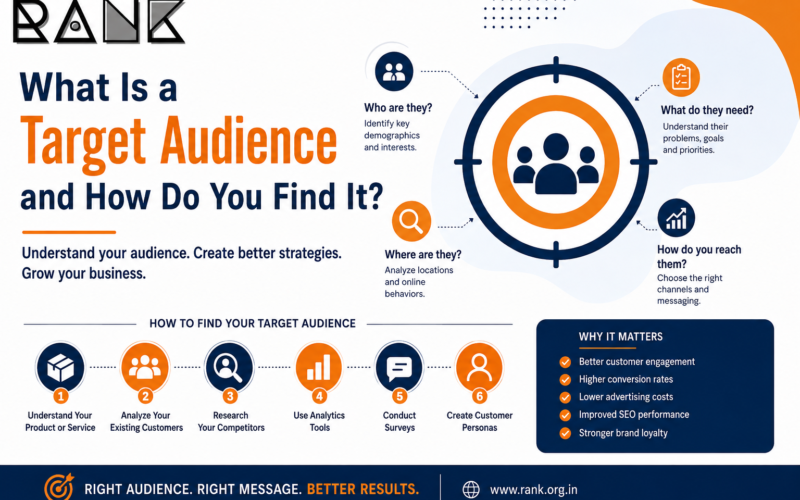
What Is a Target Audience and How Do You Find It? A Complete Guide
Every successful business has one thing in common—they know exactly who they are trying to reach. Whether you’re launching a startup, running an eCommerce store, or offering professional services, understanding your target audience is the foundation of effective marketing.
Without knowing your ideal customers, you risk spending time and money on campaigns that fail to generate leads or sales. By identifying the right audience, you can create personalized marketing messages, improve your SEO strategy, and achieve a higher return on investment (ROI).
In this guide, you’ll learn what a target audience is, why it’s important, and the step-by-step process to find the right audience for your business.
What Is a Target Audience?
A target audience is a specific group of people who are most likely to purchase your products or services. These individuals share common characteristics such as age, location, interests, occupation, income, online behavior, or purchasing habits.
Instead of trying to market to everyone, businesses focus on the people who have the highest potential to become customers.
For example:
- A luxury fashion brand targets high-income professionals.
- A digital marketing agency targets business owners and entrepreneurs.
- A fitness app targets health-conscious individuals looking to improve their lifestyle.
- An educational platform targets students, teachers, and working professionals seeking new skills.
Knowing your audience allows you to create content and campaigns that directly address their needs.
Why Is Identifying Your Target Audience Important?
Understanding your audience helps every aspect of your marketing strategy.
Some of the biggest benefits include:
- Better customer engagement
- Higher conversion rates
- More qualified leads
- Improved SEO performance
- Lower advertising costs
- Stronger brand loyalty
- Better content marketing results
When your message speaks directly to your ideal customer, they are far more likely to trust your brand and take action.
Types of Target Audiences
A business can have multiple target audiences depending on its products or services.
Demographic Audience
Based on characteristics such as:
- Age
- Gender
- Education
- Income
- Occupation
- Family status
Example:
A financial planning company may target professionals aged 30–55 with stable incomes.
Geographic Audience
Focuses on customer location.
Examples include:
- Country
- State
- City
- Local neighborhoods
Local businesses often use geographic targeting to attract nearby customers.
Psychographic Audience
This focuses on people’s interests, beliefs, values, and lifestyles.
Examples include:
- Travelers
- Fitness enthusiasts
- Technology lovers
- Eco-conscious consumers
- Entrepreneurs
Psychographic targeting creates more personalized marketing campaigns.
Behavioral Audience
Based on customer actions such as:
- Purchase history
- Website visits
- Device usage
- Brand loyalty
- Shopping frequency
Behavioral data helps businesses deliver relevant offers at the right time.
How to Find Your Target Audience
1. Understand Your Product or Service
Start by identifying the problem your product solves.
Ask yourself:
- Who needs this solution?
- What challenges does it solve?
- Why would someone choose your business?
The clearer your value proposition, the easier it becomes to identify potential customers.
2. Analyze Existing Customers
If your business already has customers, study their characteristics.
Look for patterns such as:
- Age groups
- Locations
- Interests
- Purchasing habits
- Frequently asked questions
Customer feedback can provide valuable insights into what attracts people to your business.
3. Research Your Competitors
Competitor analysis can reveal valuable audience insights.
Study:
- Their website
- Blog content
- Social media followers
- Customer reviews
- Advertising messages
This research can help you identify market gaps and opportunities.
4. Use Google Analytics
Google Analytics provides valuable information about your website visitors, including:
- Geographic locations
- Devices used
- User behavior
- Traffic sources
- Popular pages
This data helps you understand who is already engaging with your content.
5. Use Social Media Insights
Platforms like Facebook, Instagram, LinkedIn, and YouTube offer audience analytics that reveal:
- Age
- Gender
- Interests
- Active hours
- Engagement trends
These insights help optimize both organic and paid campaigns.
6. Conduct Surveys
Sometimes the best way to understand your audience is simply to ask them.
Use surveys to learn:
- Customer preferences
- Buying motivations
- Pain points
- Product expectations
Short questionnaires can provide actionable insights for future marketing.
Create a Customer Persona
After gathering data, build a customer persona.
Example:
Name: Rahul Sharma
Age: 34
Location: Delhi
Occupation: Small Business Owner
Income: ₹12 LPA
Goals:
- Increase online sales
- Improve Google rankings
- Generate more leads
Challenges:
- Limited marketing budget
- Lack of SEO knowledge
- Strong competition
Creating personas helps businesses produce more targeted content and advertising campaigns.
SEO and Target Audience
SEO is far more effective when it’s built around user intent rather than just keywords.
Instead of targeting broad terms, understand what your audience is actually searching for.
For example:
Broad Keyword:
- SEO
Audience-Focused Keywords:
- Affordable SEO services
- Local SEO company near me
- SEO for small businesses
- Best digital marketing agency
Targeting specific search intent often leads to higher rankings and better conversion rates.
Common Mistakes to Avoid
Many businesses struggle because they make these common mistakes:
- Trying to target everyone.
- Ignoring customer feedback.
- Focusing only on demographics while overlooking interests and behavior.
- Failing to update audience research as markets change.
- Creating content without understanding search intent.
Regularly reviewing audience data ensures your marketing remains relevant.
Best Tools to Identify Your Target Audience
Several tools can simplify audience research:
- Google Analytics
- Google Search Console
- Google Trends
- Meta Audience Insights
- LinkedIn Analytics
- SEMrush
- Ahrefs
- Hotjar
- Microsoft Clarity
- SurveyMonkey
Using a combination of these tools provides a more complete understanding of customer behavior.
Final Thoughts
Finding your target audience is one of the most important steps in building a successful business. When you understand who your ideal customers are, what challenges they face, and how they search for solutions, you can create marketing campaigns that resonate and drive meaningful results.
Audience research is not a one-time task. Consumer preferences, technology, and market trends continue to evolve, so businesses should regularly analyze customer data, update buyer personas, and refine their strategies. By combining audience insights with strong SEO, valuable content, and personalized marketing, you’ll be better positioned to attract qualified traffic, generate more leads, and build long-term customer relationships.
A clear understanding of your target audience doesn’t just improve your marketing—it creates a stronger, more customer-focused business that is built for sustainable growth.