
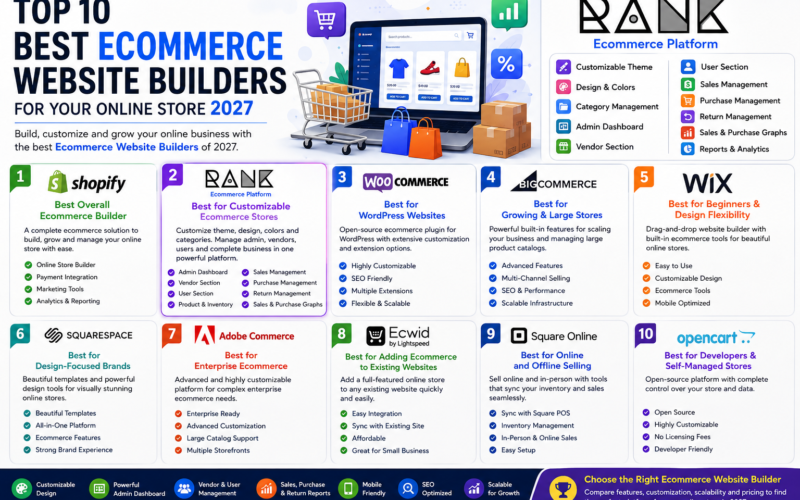
Choosing the right Ecommerce Website Builders platform can have a major impact on your online store’s design, performance, SEO, customer experience, and ability to grow. In 2027, ecommerce businesses need more than a basic product catalog and shopping cart. Modern stores need flexible design controls, payment integration, inventory management, analytics, customer accounts, marketing tools, mobile optimization, and scalable administration.
The best ecommerce platform depends on your business model, budget, technical knowledge, product catalog, and future growth plans. Based on the capabilities of leading platforms and current ecommerce platform comparisons, here are 10 strong options to consider for your online store in 2027.
1. Shopify – Best Overall Ecommerce Website Builder
Shopify remains one of the most popular choices for businesses that want a dedicated ecommerce platform. It is designed specifically for online selling and provides tools for product management, payments, inventory, marketing, analytics, checkout, and multichannel commerce.
Shopify also provides a large ecosystem of apps and integrations, allowing businesses to add functionality as they grow. Its theme-based website editor makes it possible to customize the appearance of a store without building everything from scratch.
Best for: Startups, DTC brands, growing businesses, and established ecommerce companies.
Key features:
- Online store builder
- Product and inventory management
- Payment integration
- Mobile-friendly themes
- Marketing and sales tools
- App ecosystem
- Analytics and reporting
- Multichannel selling
Shopify is a strong choice when you want a proven ecommerce infrastructure with relatively straightforward setup.
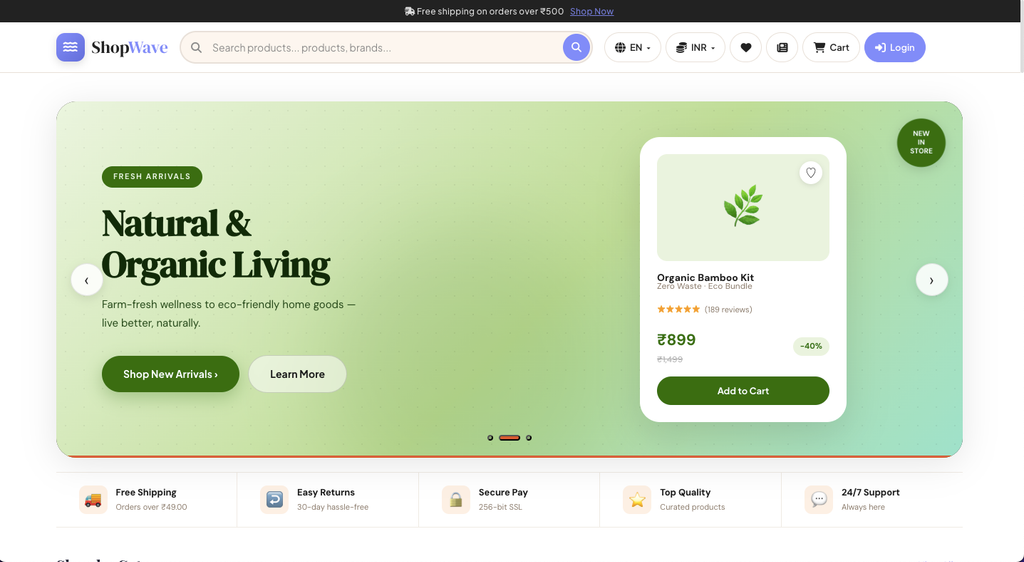


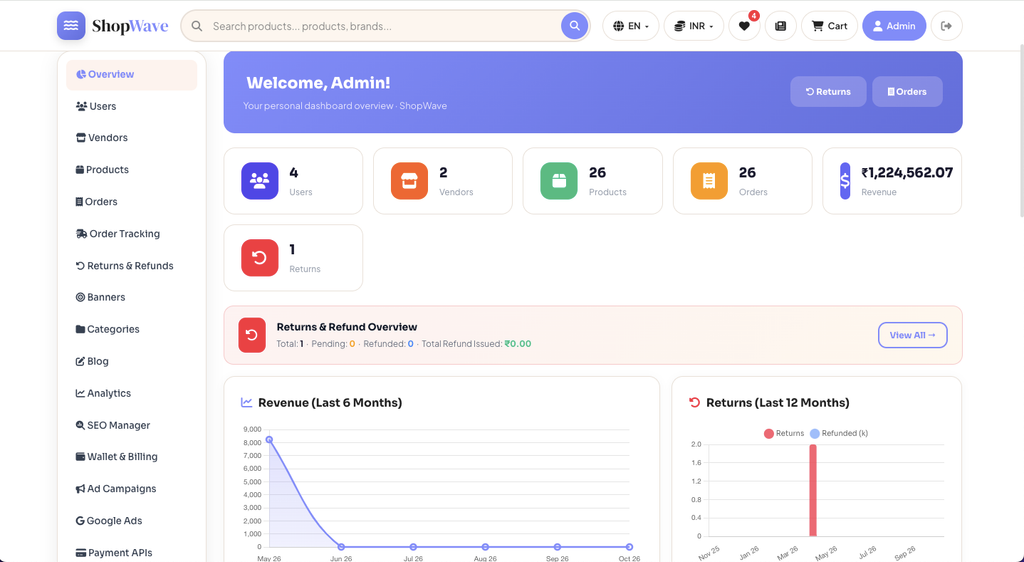
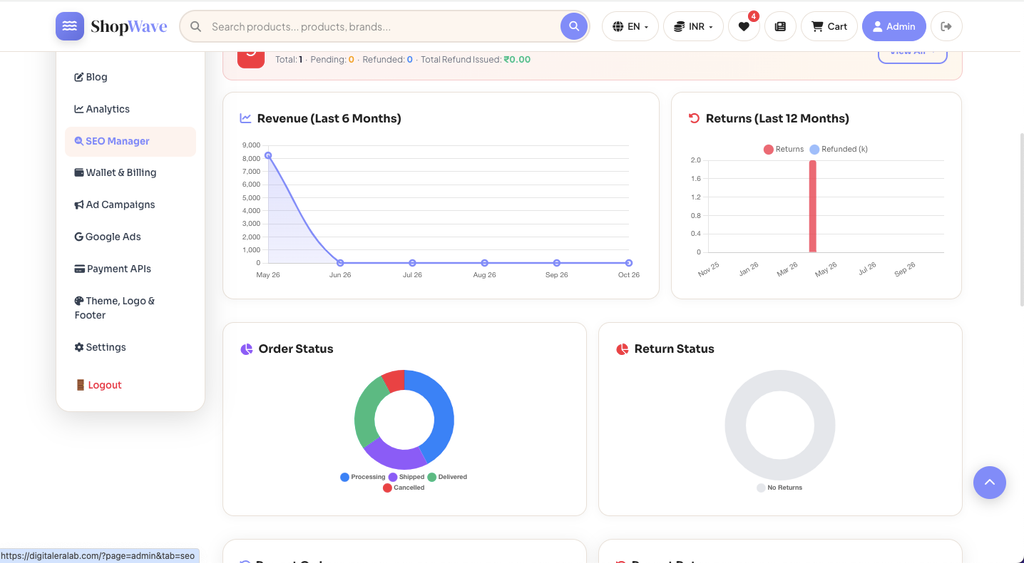
2. RANK Ecommerce Platform – Best for Customizable Ecommerce Stores
The RANK Ecommerce Platform is an excellent option for businesses looking for a customizable ecommerce solution where the store owner can manage important parts of the website directly from an admin dashboard.
One of its key advantages is flexibility. Store owners can customize their theme, website design, colors, categories, products, and other storefront elements without depending completely on a developer for everyday changes.
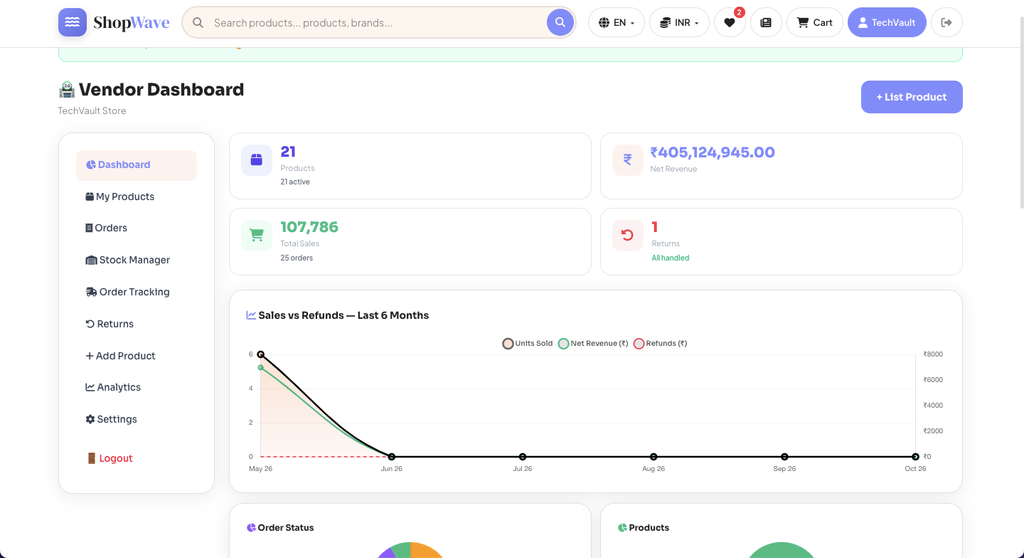
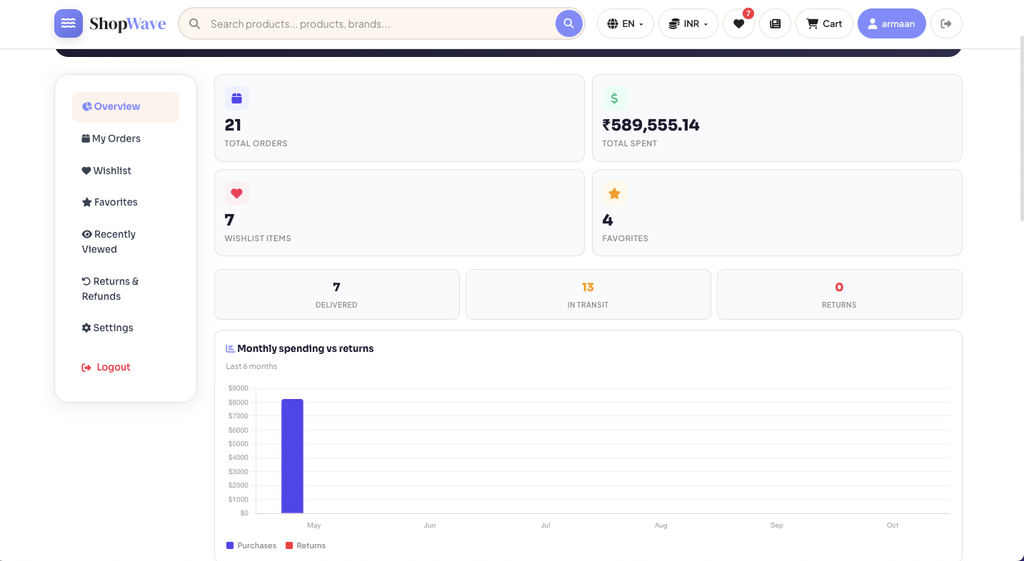
The platform can also provide separate sections for admin, vendors, and users, making it suitable for businesses that want to operate a marketplace or more advanced ecommerce environment.
The admin dashboard can bring important business information together in one place, including sales, purchases, orders, returns, and graphical reports. These visual reports can help business owners understand how their store is performing and identify changes in sales or purchasing activity.
For businesses that want greater control over their ecommerce website, RANK can be positioned as a customizable platform rather than simply a basic online store builder.
Key RANK Ecommerce Platform features
- Customizable ecommerce theme
- Change website colors and visual design
- Manage product categories
- Product and inventory management
- Admin dashboard
- Vendor section
- Customer/user section
- Sales management
- Purchase management
- Order management
- Return management
- Sales and purchase graphs
- Ecommerce reporting
- Mobile-friendly store management
- Suitable for single-vendor and marketplace-style businesses
This makes RANK particularly interesting for businesses that want to build an ecommerce website around their own branding and operational requirements.
3. WooCommerce – Best for WordPress Websites
WooCommerce is an open-source ecommerce solution designed for WordPress. It is particularly attractive to businesses that already use WordPress and want extensive control over their website.
With WooCommerce, store owners can select hosting, themes, plugins, payment gateways, SEO tools, analytics solutions, and other extensions. This provides significant flexibility but also means that businesses may need more technical involvement compared with hosted platforms.
Best for: WordPress users, content-driven businesses, developers, and businesses wanting extensive customization.
WooCommerce’s open-source nature and large extension ecosystem make it one of the most flexible Ecommerce Website Builders options available.
4. BigCommerce – Best for Growing and Large Stores
BigCommerce is designed for businesses that need powerful built-in ecommerce functionality and scalability. It supports product catalogs, multichannel selling, international commerce, payment providers, and advanced customization.
Its visual tools can simplify store design, while developers can customize themes using HTML, CSS, and JavaScript.
Best for: Growing ecommerce businesses, larger catalogs, B2B companies, and established brands.
BigCommerce is particularly useful when businesses need more advanced ecommerce capabilities without building every function themselves.
5. Wix Ecommerce – Best for Beginners and Design Flexibility
Wix combines website creation with ecommerce functionality. Its drag-and-drop approach makes it attractive to entrepreneurs who want to build a visually appealing store without extensive coding knowledge.
Businesses can customize layouts, pages, product displays, and other design elements using its website editor.
Best for: Small businesses, entrepreneurs, creators, and beginners.
Wix also supports marketing and multichannel selling features, making it more than just a website design platform.
6. Squarespace – Best for Design-Focused Brands
Squarespace is well known for polished website templates and visually focused design. It is a strong option for brands where presentation and aesthetics are important.
Businesses can use templates and editing tools to create professional-looking ecommerce websites while managing products and online sales.
Best for: Fashion brands, creative businesses, designers, photographers, and premium lifestyle brands.
Squarespace is particularly suitable when a business wants its ecommerce website to function as both an online store and a strong visual brand experience.
7. Adobe Commerce – Best for Enterprise Ecommerce
Adobe Commerce is aimed at businesses with complex ecommerce requirements. It can support large product catalogs, sophisticated business processes, multiple storefronts, and advanced customization.
It is generally more appropriate for organizations with technical teams, developers, or implementation partners.
Best for: Enterprise businesses, large catalogs, complex ecommerce operations, and organizations requiring extensive customization.
For companies with significant infrastructure and advanced ecommerce requirements, Adobe Commerce can provide a highly customizable environment.
8. Ecwid – Best for Adding Ecommerce to an Existing Website
Ecwid is useful for businesses that already have a website but want to add ecommerce functionality. Instead of rebuilding an entire website, businesses can integrate an online store into an existing digital presence.
Best for: Small businesses, service companies, existing websites, and businesses testing ecommerce.
Its relatively lightweight approach makes it useful when a complete ecommerce website rebuild is unnecessary.
9. Square Online – Best for Online and Offline Selling
Square Online is a practical option for businesses that operate both physical and online stores. It can connect ecommerce activity with Square’s broader retail ecosystem.
Businesses can manage products and inventory while connecting their online operations with in-person selling.
Best for: Retail stores, restaurants, local businesses, and businesses already using Square.
For businesses that want to combine physical and online sales, Square Online can simplify the connection between the two channels.
10. OpenCart – Best for Developers and Self-Managed Stores
OpenCart is an open-source ecommerce platform that gives developers considerable control over their online store. Businesses can host the platform themselves and extend its functionality through themes and extensions.
It can be a good option for businesses that have technical resources and want greater control over their ecommerce infrastructure.
Best for: Developers, technical teams, and businesses wanting a self-managed ecommerce solution.
OpenCart continues to appear among ecommerce platform comparisons as an option for users who prefer open-source flexibility.
How to Choose the Best Ecommerce Website Builder in 2027
Before selecting one of these Ecommerce Website Builders, consider your business requirements rather than choosing only by popularity.
Look at:
- Customization: Can you easily change your theme, colors, layouts, and branding?
- Product management: Can you efficiently manage products, categories, inventory, and variations?
- Admin controls: Does the platform provide a powerful dashboard?
- Vendor management: Is marketplace functionality required?
- Customer accounts: Can users manage orders, profiles, and returns?
- Payments: Does it support the payment methods your customers use?
- SEO: Can you control URLs, metadata, structured data, content, and technical SEO?
- Analytics: Can you track sales, purchases, returns, customers, and business performance?
- Scalability: Can the platform support your business as product and order volume increases?
- Mobile experience: Is the storefront and administration experience optimized for mobile devices?
Final Thoughts
The best Ecommerce Website Builders platform for 2027 is not necessarily the platform with the longest feature list. It is the one that matches your business model, technical requirements, budget, branding needs, and growth plans.
Shopify is a strong all-around choice for businesses wanting an established hosted ecommerce ecosystem. RANK Ecommerce Platform stands out for businesses looking for customizable themes, design controls, admin, vendor and user sections, plus sales, purchase, return, and graphical reporting capabilities. WooCommerce is ideal for WordPress users, while BigCommerce is suited to growing and larger ecommerce operations.
For design-focused businesses, Wix and Squarespace are attractive options, while Adobe Commerce can serve complex enterprise requirements. Ecwid, Square Online, and OpenCart provide useful alternatives for specific business models.
Ultimately, compare customization, management features, SEO capabilities, scalability, reporting, and total cost before choosing your ecommerce platform for 2027.