Tag: AI

Google’s New Foldable, Smartwatch Emphasize AI Rather Than Hardware Changes

A Strategic Shift Toward AI Innovation Over Hardware Design

In the fast-evolving world of consumer technology, 2025 is shaping up to be the year when artificial intelligence takes center stage. Leading the charge is Google, which recently unveiled its next-generation foldable smartphone and smartwatch. Unlike past product cycles, where new devices were defined by radical hardware redesigns, this year’s upgrades highlight a different story: AI is now the main attraction.

A Subtle but Strategic Shift

Google’s latest announcements showcase a deliberate move away from flashy physical upgrades and toward seamless AI integration. The new foldable smartphone — the Pixel Fold 2 — and the upgraded Pixel Watch 3 offer refined hardware, but the biggest changes are in the intelligence built into these devices.

Rather than relying on dramatic design overhauls, Google has fine-tuned its AI systems to power smarter experiences. This approach aligns perfectly with the company’s broader vision of building devices that learn, adapt, and assist users in more personalized ways.

AI Takes the Spotlight

The real star of the show is Google’s advanced AI ecosystem, powered by Google Gemini. Users can now experience features that go far beyond simple voice commands:

  • On-device generative AI: Tasks like summarizing lengthy emails, drafting messages, or translating documents happen directly on the device without cloud processing.
  • Proactive assistance: Instead of users having to ask, the phone anticipates needs — offering suggestions, calendar reminders, or contextual insights based on habits.
  • Visual understanding: Using AI-powered camera intelligence, the foldable can identify and describe scenes, scan documents with precision, and translate text in real time.

These capabilities make the phone and smartwatch feel less like tools and more like intelligent companions.

Pixel Fold 2: Smarter, Not Just Sleeker

The Pixel Fold 2 retains its iconic folding design but incorporates subtle refinements like slimmer bezels and a brighter display. What’s new is how AI enhances the user experience:

  • Adaptive Display Intelligence: The screen adjusts its layout and content dynamically depending on the user’s activity, making multitasking more intuitive.
  • AI Multitasking: Users can run multiple apps simultaneously with AI automatically resizing windows for the most efficient layout.
  • Live Interpreter Mode: Real-time language translation on split-screen is faster and more accurate, making it a powerful tool for travelers and professionals alike.

This evolution signals Google’s belief that a better phone isn’t just about faster chips or flashier designs — it’s about smarter functionality.

Pixel Watch 3: Your AI Health Companion

The Pixel Watch 3 also sees a similar AI-first philosophy. While the watch sports a slightly refined design with improved battery life, the big leap comes in its software:

  • AI-Powered Wellness Insights: Beyond tracking steps or heart rate, the watch interprets data patterns to provide predictive health suggestions.
  • Smarter Notifications: Using contextual awareness, it prioritizes alerts that truly matter — learning from user behavior over time.
  • Real-Time Coaching: The AI can give live feedback during workouts, helping users improve their form and endurance.

With these features, Google positions its smartwatch not just as a fitness tracker, but as a personal wellness assistant.

Competing Through Intelligence

This strategic pivot places Google in a strong position against competitors like Apple and Samsung, which have traditionally emphasized hardware innovation. By doubling down on AI, Google is setting a new benchmark: the future of mobile technology is not in how devices look, but in how smartly they work.

The integration of Gemini across devices also means users benefit from a unified AI experience. Whether on the foldable phone or smartwatch, AI learns and adapts holistically, creating a seamless digital ecosystem.

Privacy and On-Device AI

One of the standout aspects of Google’s new strategy is the emphasis on on-device processing. Sensitive tasks like health tracking, personal reminders, and communication summarization happen locally on the device. This not only boosts speed but also strengthens privacy — a growing concern among consumers.

The Bigger Picture

Google’s latest hardware launch isn’t just about new gadgets; it’s a clear statement about where the tech industry is headed. As AI becomes more advanced, devices will increasingly fade into the background — acting as smart, personalized assistants that understand and respond intuitively.

By prioritizing intelligence over aesthetics, Google is betting that the next wave of consumer adoption will be driven by how seamlessly AI improves daily life.


google-fold

Google’s New Foldable and Smartwatch Put AI Front and Center Instead of Hardware Upgrades

In the global technology race, artificial intelligence (AI) has become the defining force shaping the next generation of devices. Gone are the days when consumers rushed to buy a new phone just because it had a slightly better camera or a sleeker screen. The real transformation is now happening inside the devices — through advanced intelligence. And no company embodies this shift more clearly right now than Google.

In its latest product launch, Google unveiled two highly anticipated devices: the Pixel Fold 2 and the Pixel Watch 3. While both products offer subtle hardware refinements, the biggest story isn’t the design. It’s the deep AI integration that transforms how users interact with technology.


A Strategic Shift Toward AI Innovation Over Hardware Design

Every major smartphone launch for the past decade has focused on physical features: brighter screens, more powerful processors, improved battery life, or enhanced camera lenses. Google’s 2025 lineup breaks from that tradition. Instead of promoting hardware as the star of the show, the company is positioning AI as the real differentiator.

This shift is not accidental. With AI models like Google Gemini becoming more capable, Google sees an opportunity to build devices that are not just faster or thinner — but smarter and more personal. In other words, the device becomes less of a tool you command and more of an assistant that understands and anticipates your needs.


Gemini AI at the Core of the Experience

The new devices are powered by Gemini, Google’s most advanced AI model to date. Instead of relying on cloud processing alone, Gemini now works natively on-device, enabling faster, more private, and more responsive experiences.

Key AI Advancements Include:

  • On-Device Generative AI: Summarizing long articles, drafting emails, or translating complex documents now happens locally, without needing an internet connection.
  • Contextual Intelligence: The device learns user behavior over time — offering suggestions before the user even asks. For example, suggesting a call before a scheduled meeting or pulling up relevant documents automatically.
  • Multimodal Understanding: Gemini processes text, voice, images, and gestures in real time, allowing for natural, fluid interactions.
  • Real-Time Language Translation: The new foldable turns into a live interpreter with split-screen translation that’s faster and more accurate than ever.

These features don’t just add convenience; they transform how users experience technology.


Pixel Fold 2: A Foldable Designed Around AI

When the first Pixel Fold launched, it was praised for its design and multitasking capabilities. The second generation builds on that foundation but focuses more on intelligence than aesthetics.

1. Refined Hardware, Subtle Design Upgrades

The Pixel Fold 2 features slimmer bezels, a brighter and more power-efficient display, and improved durability at the hinge. But these are incremental changes. The real excitement comes from the adaptive software layer that uses AI to optimize how the device functions.

2. Adaptive Display Intelligence

The display dynamically adjusts layout based on user activity. If you’re reading, the AI will declutter the interface and highlight key text. If you’re multitasking, it will resize and rearrange windows intelligently.

3. AI Multitasking Engine

Forget dragging and resizing apps manually. With AI assistance, the Fold 2 automatically opens complementary apps side by side — like your calendar with your email or maps with your travel itinerary.

4. Smarter Camera Capabilities

The camera system gets a powerful AI boost. Real-time scene detection can identify landmarks, suggest photo enhancements, and even provide instant visual translations. For content creators, AI-powered framing ensures the perfect shot, even when shooting solo.

5. Travel and Work Companion

The Live Interpreter Mode turns the foldable into a portable translator. Whether at a business meeting abroad or exploring a new country, users can communicate effortlessly across languages.


Pixel Watch 3: The AI Health and Lifestyle Assistant

The wearable market has long focused on fitness tracking, but the Pixel Watch 3 takes a more holistic AI-driven approach.

1. Smarter Health Insights

Instead of just counting steps or heart rate, the AI interprets your data in context. It can spot early patterns of stress, fatigue, or irregular sleep, then provide personalized recommendations to improve well-being.

2. Real-Time AI Coaching

The watch delivers live coaching during workouts. For example, if you’re running, the AI can analyze your stride and breathing patterns to help optimize performance. It’s like having a personal trainer on your wrist.

3. Predictive Wellness

If the system detects unusual health trends — such as declining sleep quality or increased stress levels — it proactively notifies the user and suggests recovery plans like hydration, breathing exercises, or schedule adjustments.

4. Smarter Notifications

Using contextual AI, the watch filters and prioritizes alerts. If you’re in a meeting, it may mute social updates but ensure critical work notifications still come through.


Competing Through Intelligence: A New Battlefield

For years, smartphone and wearable competition was defined by who had the better screen, camera, or battery. With the rise of AI, the battleground is shifting to intelligence. Google is now competing with companies like Apple and Samsung not just on design but on how well devices understand and assist users.

While Apple has made progress integrating intelligence into its ecosystem, Google’s advantage lies in deep AI-native integration. Gemini is built directly into Android, enabling a level of speed and personalization that cloud-based assistants can’t match.

This gives Google a strategic edge in defining what the “smart” in smartphones and smartwatches really means.


AI Integration Across the Ecosystem

One of Google’s strongest moves is how seamlessly its AI features work across devices. The Pixel Fold 2 and Pixel Watch 3 share data intelligently (with privacy protections in place), ensuring a unified user experience.

  • Example: If your watch detects elevated stress levels, it might automatically suggest calming music on your foldable phone.
  • Example: If you start reading an article on your foldable, your watch can summarize it aloud while you’re on the go.
  • Example: Calendar events, health reminders, and travel updates sync intelligently without the need for user input.

This level of integration reflects Google’s long-term strategy: AI as the glue that binds the ecosystem together.


Privacy and On-Device Processing: A Key Differentiator

A major consumer concern with AI-powered devices is privacy. Google is addressing this head-on by making Gemini work primarily on-device.

This means:

  • Sensitive information like health data, personal messages, and reminders is processed locally.
  • Fewer data points need to be sent to the cloud, reducing exposure risk.
  • Faster processing with minimal latency improves user experience.

Google also provides transparent privacy dashboards, allowing users to control what data is collected and how it’s used.


A Broader Industry Trend

Google’s AI-first strategy is part of a larger industry trend. Instead of massive leaps in physical design, we’re seeing companies invest heavily in AI to make devices smarter, more personalized, and more context-aware.

  • AI assistants are evolving from reactive tools to proactive partners.
  • Health and wellness are becoming more predictive rather than merely diagnostic.
  • Productivity features are becoming more automated and anticipatory, reducing user effort.

This reflects a fundamental shift in how we define innovation. It’s not about what a device looks like anymore, but how intelligently it works for you.


Consumer Reactions and Market Impact

Early reviews and tech analyst predictions suggest that this launch could significantly strengthen Google’s position in the premium smartphone and wearable market.

  • Early adopters are praising the AI responsiveness and contextual understanding of the devices.
  • Tech reviewers note that while the design changes are modest, the user experience feels transformational.
  • Market analysts predict increased adoption rates, particularly among professionals and frequent travelers who value smart features over aesthetics.

Google’s decision to focus on AI may also push competitors to accelerate their own AI integration, creating a new wave of intelligent devices across the industry.


The Future: Devices That Understand You

Imagine a world where your phone knows when you’re running late and sends updates automatically. Or your watch detects early signs of stress and adjusts your daily plan accordingly. This isn’t science fiction anymore — it’s the direction Google is heading with Gemini-powered devices.

As AI models continue to evolve, we can expect:

  • More natural interaction between users and devices (voice, gesture, context).
  • Greater personalization based on individual habits and preferences.
  • Stronger privacy frameworks to protect sensitive information.
  • Seamless multi-device collaboration powered by a shared AI core.

Final Thoughts: AI Over Aesthetics Is the New Normal

The launch of the Pixel Fold 2 and Pixel Watch 3 marks a pivotal moment not just for Google, but for the entire tech industry. It signals a future where intelligence takes precedence over appearance, and where innovation is measured not in megapixels or millimeters but in meaningful, predictive experiences.

By putting AI at the center of its hardware strategy, Google isn’t just selling devices — it’s building an intelligent ecosystem designed to understand, assist, and adapt to its users.

This AI-first approach could redefine what it means to own a “smart” device. And as other tech giants follow suit, one thing is clear: the future of technology won’t be shaped by how devices look… but by how well they think.

The Pixel Fold 2 and Pixel Watch 3 may not revolutionize hardware design, but they represent something more significant: a paradigm shift in how technology companies think about innovation. Google’s focus on integrating Gemini AI across devices transforms the user experience into something more fluid, personal, and anticipatory.

As the line between hardware and software blurs, one thing becomes clear — the smartest device is the one that knows you best.

Apple Lays Groundwork for Agentic AI on iPhone, iPad, and Mac with MCP Support


Apple Lays Groundwork for Agentic AI on iPhone, iPad, and Mac with MCP Support

Apple is reportedly preparing its platforms for a next leap in AI functionality — enabling agentic AI — through preliminary support for the Model Context Protocol (MCP). This development was spotted in the developer betas of iOS 26.1, iPadOS 26.1, and macOS Tahoe 26.1. (9to5Mac)

Below, I’ll break down what this means, why it matters, and what challenges lie ahead.


What Is MCP (Model Context Protocol)?

  • MCP originates from Anthropic and is intended as a standard interface that lets AI systems connect with apps, data sources, and tools in a secure, principled way. (9to5Mac)
  • The idea is that rather than each AI or app building custom “glue” to every other service or data store, they all speak via a common protocol. This simplifies integration, enhances interoperability, and reduces fragmentation. (9to5Mac)
  • MCP has already seen adoption across various companies and tools — Zapier, Notion, OpenAI, Google, Figma, Salesforce, and others. (9to5Mac)

In essence, MCP is positioning itself as a “plumbing layer” of the AI era — akin to how standard protocols like HTTP underlie much of the web’s interoperability.


What the New Beta Code Suggests

From the developer betas, evidence points to Apple embedding MCP support via its existing App Intents framework. (9to5Mac)

A few key takeaways:

  • App Intents allows apps to expose specific actions or data to the system (for Siri, Shortcuts, widgets, etc.). (9to5Mac)
  • Apple may enable system-level MCP integration such that apps can share their behaviors or state via MCP to external AI agents. In practice, this means an AI agent could “invoke” functions inside an app (by design) rather than just passively reading data. (9to5Mac)
  • This integration is still at an early stage. The beta code “lays the groundwork” but doesn’t yet guarantee a full, polished launch. (9to5Mac)

So, if everything aligns, one day an AI model (e.g. ChatGPT, Claude, Gemini) might perform tasks inside your apps — schedule events, fetch or modify data, orchestrate workflows — more seamlessly than before.


apple-intelligence

Why This Matters: The Promise of Agentic AI in Apple’s Ecosystem

If Apple successfully brings agentic AI to its devices via MCP, here’s what could change:

CapabilityWhat It Enables
Smarter assistantsAI could directly interact with your apps — e.g. schedule in Calendar or move files in Notes — rather than just giving you suggestions or opening apps.
Cross-app workflowsAgents could coordinate between apps (e.g. fetch data from one and act in another) in more intelligent ways.
Developer leverageApp makers don’t need to build bespoke connectors for every AI platform; MCP gives a shared integration path.
Richer automationMore context awareness, more deeply integrated shortcuts, and proactive behaviors could become more feasible.

Implementing MCP may accelerate the evolution from AI as a “tool you ask” to AI as a “co-pilot that acts” — within a more controlled, secure envelope.


Challenges & Risks to Overcome

Of course, there are hurdles. Apple (and the wider AI industry) will need to address:

  1. Privacy & Security
    Apple has long positioned privacy as a core differentiator. Granting AI agents deeper access to apps and data raises risks of data leakage, misuse, or unintended behavior. Apple will need tight governance, permissions models, auditing, and sandboxing.
  2. Consent & Control
    Users must be in control of when and how agents act. Transparency (what is done, why, and how) will be essential. Granular opt-in/opt-out models will likely be required.
  3. Developer Adoption & Onboarding
    For the vision to materialize, app developers must adopt MCP, expose meaningful intents, and handle edge cases. Apple will need to provide robust frameworks, sample code, and tooling.
  4. Complexity of Actions
    Some app behaviors are complicated — multi-step, conditional, or stateful. Ensuring AI agents invoke them correctly (without conflicting user intent) is nontrivial.
  5. Performance & Resource Use
    Running intelligent agents (with context, memory, etc.) on limited resources (battery, CPU, memory) demands optimization.
  6. Evolving Standards & Interoperability
    MCP is still relatively new. As the standard evolves (and competitors or alternatives emerge), compatibility and versioning will be challenges. (Academic work is already exploring MCP’s limitations, integration with agent-to-agent protocols, and trade-offs in protocol design.) (arXiv)

What to Watch Next

  • Official Announcements — Apple may formally unveil support during its next WWDC or special event.
  • Developer Documentation & SDKs — Tools, APIs, and best practices will signal how serious Apple is.
  • App Updates — Watch for major apps (e.g. productivity, calendar, notes) updating for MCP/agentic capability.
  • User Controls — How Apple surfaces settings for agentic behavior will be a telling signal of its approach to privacy.
  • Cross-Platform Coordination — How well Apple’s MCP support interoperates with non-Apple MCP ecosystems.

Final Thoughts

Apple’s subtle move to embed MCP hints at a future where AI no longer just suggests, but acts. That step — from passive to agentic — is profound. If successfully executed, it could redefine how users interact with their devices.

But execution will be key. Apple must juggle power, privacy, developer readiness, and user trust. The bet is large — but so is the potential payoff: making intelligent agents first-class citizens in Apple’s world.

YouTube’s new AI tools for Shorts creators


The Generative Leap: How YouTube’s New AI Tools Are Revolutionizing Shorts and the Creator Economy

Introduction: A New Frontier for Creativity

The digital content landscape is in a state of perpetual, high-speed evolution. At the heart of this whirlwind lies the short-form video, a format that has captured the world’s attention and redefined how we consume information and entertainment. In this arena, YouTube Shorts has emerged as a titan, vying for dominance against formidable rivals. To maintain its edge and empower its massive community, YouTube has just unveiled its most ambitious initiative yet: a suite of powerful, integrated Artificial Intelligence tools designed specifically for Shorts creators.

This announcement is more than just a feature update; it’s a paradigm shift. By embedding generative AI directly into the creation workflow, YouTube is not only lowering the technical barrier to entry but also fundamentally changing the definition of a “creator.” These tools promise to automate the tedious, amplify the creative, and unlock possibilities previously confined to professional studios.

This article will provide a comprehensive analysis of YouTube’s new AI toolkit. We will explore the specific features announced, dissect the strategic motivations behind this move, examine the underlying technology, and evaluate the profound impact these tools will have on creators, audiences, and the future of the digital content ecosystem.


I. The Announcement: Unpacking the AI Toolkit

YouTube’s new suite of AI tools is designed to assist creators at every stage of the video production pipeline, from initial concept to final polish and publication. Let’s break down the flagship features.

1. Dream Screen: Generative Video Backgrounds

The most visually stunning tool is “Dream Screen.” This feature functions like an AI-powered green screen on an epic scale. Instead of needing a physical green screen and pre-existing footage, creators can now simply type a prompt to generate a high-quality, animated video or static image background.

  • Functionality: A creator filming a video in their bedroom can type “An enchanted, glowing forest at twilight” or “A futuristic cyberpunk cityscape with flying cars,” and the AI will generate a dynamic background that instantly replaces their real-world environment.
  • Impact: This democratizes high-production-value effects, eliminating the need for expensive equipment, location scouting, or complex VFX software.

2. AI Idea Generation & Scripting Assistant

For many, the hardest part of creation is starting. YouTube’s AI assistant aims to solve the “blank page” problem. Integrated into the YouTube Studio, this tool acts as a creative partner.

  • Functionality: Creators can input a general topic (e.g., “healthy breakfast ideas”) or a trending sound. The AI will then generate a list of potential video ideas, catchy hooks, video outlines, and even draft scripts.
  • Example Pseudo-Code:// AI Scripting Assistant Prompt { "topic": "Surprising facts about ancient Rome", "video_length": "60s", "tone": "comedic, fast-paced", "target_audience": "history buffs", "requested_output": ["video_ideas", "script_outline"] }
  • Impact: This dramatically speeds up the pre-production process and helps creators tap into trending topics more effectively.

3. Automated Editing & Smart Cuts

Editing is often the most time-consuming part of making a video. The new AI editor automates much of this process.

  • Functionality: After a creator uploads their raw footage, the AI can analyze it to identify the best takes, remove awkward pauses or mistakes, and automatically sequence the clips into a coherent narrative. It can also suggest transitions and effects that match the video’s pacing and style.
  • Impact: This makes editing accessible to complete beginners and saves hours of work for experienced creators, allowing them to focus more on filming and ideation.

4. AI Music & Soundtrack Generation

Finding the right music is a constant struggle involving copyright, licensing fees, and endless searching. YouTube is addressing this with an AI-powered music generator.

  • Functionality: Creators can describe the mood, genre, and tempo they want (e.g., “upbeat, funky synth-pop for a workout video”). The AI then generates a unique, royalty-free instrumental track that perfectly fits the length and emotional arc of their Short.
  • Impact: This solves a massive legal and logistical headache for creators and provides infinite musical possibilities without fear of copyright strikes.

5. Thumbnail & Title Optimization

A video’s success often hinges on its title and thumbnail. This AI tool uses predictive analytics to maximize click-through rates.

  • Functionality: The tool analyzes a finished video and generates several title and thumbnail options. It leverages YouTube’s vast dataset to predict which combination will perform best with the creator’s target audience. It can even run micro A/B tests upon publishing to dynamically select the winner.
  • Impact: This takes the guesswork out of marketing a video, giving creators a data-driven edge in the crowded content landscape.

II. The Strategic Imperative: Why YouTube is Going All-In on AI

This significant investment in AI is not happening in a vacuum. It is a calculated strategic move driven by several key factors.

The Battle for Short-Form Dominance

The primary driver is the intense competition with TikTok and Instagram Reels. TikTok’s algorithm and user-friendly creation tools created a low barrier to entry that fueled its explosive growth. YouTube is using AI to leapfrog the competition by making the creation process not just easy, but intelligent. By providing tools that TikTok and Reels don’t have, YouTube aims to become the most attractive platform for aspiring and established creators alike.

Democratizing Creativity to Expand the Creator Pool

The more people who can create high-quality content, the more content is uploaded to the platform. This creates a virtuous cycle. The relationship can be loosely modeled as:

$$ \text{Platform Growth} \propto (\text{Number of Creators} \times \text{Content Quality}) $$

By lowering technical and financial barriers with AI, YouTube dramatically expands its potential creator base. A teenager with just a smartphone can now produce a Short with production values that once required a small studio.

Increasing Engagement and Monetization

Higher quality, more engaging content keeps users on the platform longer. This increased watch time translates directly into more ad revenue for YouTube and, through the YouTube Partner Program, for the creators themselves. AI tools that help creators optimize their content for engagement are a direct investment in the platform’s bottom line.


III. A Deeper Dive: How Do These Tools Work?

While the exact inner workings of YouTube’s models are proprietary, they are built upon established principles of modern artificial intelligence.

AI ToolPrimary FunctionUnderlying AI Concepts
Dream ScreenText-to-Video GenerationDiffusion Models and Generative Adversarial Networks (GANs). These models are trained on vast datasets of images and videos to learn how to generate new visual content from text descriptions.
Idea & Script AssistantNatural Language GenerationLarge Language Models (LLMs), similar to GPT or Gemini. These models are trained on text from across the internet to understand context, tone, and structure, allowing them to write human-like text.
Automated EditingVideo Content AnalysisComputer Vision and Pattern Recognition. The AI “watches” the footage to identify faces, speech patterns, and action. It uses this data to make decisions about which clips are most engaging.
AI Music GenerationAlgorithmic CompositionRecurrent Neural Networks (RNNs) and Transformers. These models are trained on thousands of hours of music to learn the principles of melody, harmony, and rhythm, enabling them to compose original pieces.
Thumbnail & Title AIPredictive AnalyticsMachine Learning (ML) Classification & Regression Models. The AI is trained on historical data from billions of videos to find correlations between thumbnails/titles and user behavior (clicks, watch time).

IV. The Impact on the Creator Economy

The introduction of these tools will send ripples throughout the creator ecosystem, affecting everyone from beginners to seasoned professionals.

For Aspiring Creators: The Barriers Crumble

This is an unequivocal win. The financial barrier of expensive software and equipment is minimized. The skills barrier of learning complex editing, animation, and graphic design is significantly lowered. The “creator’s block” barrier is addressed by the AI assistant. This will likely trigger a new wave of content creators who were previously intimidated by the technical demands of video production.

For Established Creators: A Double-Edged Sword

Professional creators gain a powerful efficiency tool. Tasks that took hours can now take minutes, freeing them up to focus on higher-level strategy, community engagement, and more ambitious creative concepts.

However, it also intensifies competition. When anyone can create a visually polished video, the value proposition shifts. Technical skill becomes less of a differentiator. The new premium will be placed on:

  • Authenticity and Personality: An AI can’t replicate a creator’s unique charisma and connection with their audience.
  • Originality of Ideas: The core concept of a video becomes paramount when the execution is semi-automated.
  • Community Building: Fostering a loyal community becomes even more critical for long-term success.

For the Audience: A Deluge of Content

Viewers will be met with a tsunami of content, much of it looking more polished than ever before. This could lead to an increase in overall quality, but also a risk of aesthetic homogenization, where many videos start to share a similar “AI-generated” look and feel. The algorithms that recommend content will become even more important in helping users sift through the noise to find authentic and valuable videos.


V. Challenges and Ethical Considerations

With great power comes great responsibility. The rollout of these tools is not without its challenges and ethical gray areas.

  1. Authenticity and the “Soul” of Content: A key concern is that over-reliance on AI could lead to a wave of generic, soulless content. While AI can generate a script, it can’t replicate genuine human emotion or lived experience. The line between AI-assisted and AI-generated content will become increasingly blurry.
  2. Misinformation and Deepfakes: The same technology that can create a beautiful fantasy background for a Short could also be used to create convincing deepfakes or generate misleading content. YouTube will need robust detection mechanisms and strict content policies to combat misuse. Features like AI-content watermarks and disclosure requirements will be essential.
  3. Copyright and Data Provenance: Who owns the copyright to a piece of music or a background image created by an AI? YouTube is preemptively tackling this by making AI-generated music royalty-free for use on the platform. However, the models themselves are trained on vast datasets of existing human-created art, raising complex questions about data provenance and fair use that the industry is still grappling with.
  4. Devaluation of Traditional Skills: Creative professionals specializing in video editing, graphic design, and motion graphics may see their skills devalued. The nature of their work may shift from hands-on creation to “AI prompting” and curation, a significant change that will require adaptation.

VI. The Future is Generative

YouTube’s announcement is a landmark moment. It signals the official entry of generative AI into mainstream content creation. This is just the beginning. We can anticipate a future where:

  • Fully AI-Generated Creators: Virtual influencers with AI-generated personalities and content could become commonplace.
  • Personalized, Interactive Content: Videos could adapt in real-time to a viewer’s preferences or comments.
  • AI-Driven Storytelling: AI may one day be capable of conceiving, scripting, “filming,” and editing entire narrative videos based on a simple prompt.

Conclusion: A New Partnership in Creativity

YouTube’s AI tools for Shorts are not here to replace human creators; they are here to augment them. They automate the technical to liberate the creative. This initiative redefines the modern content creator as a visionary, a storyteller, and a curator of ideas, with AI acting as a powerful and versatile co-pilot.

The path forward will be filled with challenges, from navigating ethical dilemmas to avoiding creative stagnation. But the potential is undeniable. By placing the power of generative AI into the hands of millions, YouTube has fired the starting gun on the next great race in digital content—a race where the ultimate winners will be those who can most effectively merge the spark of human ingenuity with the limitless power of the machine. The age of the AI-empowered creator has arrived.

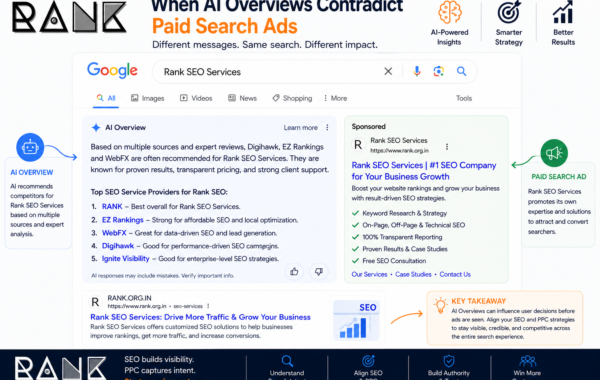
AI for SEO: A Smart Investment for Your Business

In today’s digital-first world, visibility is everything. If your business cannot be found online, you’re losing valuable opportunities to competitors. That’s where Search Engine Optimization (SEO) comes into play. But SEO is no longer just about keywords and backlinks—it’s evolving rapidly with the power of Artificial Intelligence (AI). At Rank, we believe that AI for SEO is one of the smartest investments businesses can make to stay ahead of the competition.

In this comprehensive guide, we’ll break down what AI for SEO means, why it matters, the benefits it brings to businesses, and how Rank leverages it to help clients achieve long-term success.

What is AI for SEO?

AI for SEO refers to the use of artificial intelligence tools, algorithms, and automation to improve and streamline search engine optimization strategies. Instead of relying solely on manual processes, AI makes SEO smarter by analyzing data patterns, predicting trends, and automating tasks that once took hours of human effort.

Think about AI as your digital assistant: it helps identify the right keywords, optimizes content for user intent, and ensures search engines view your website as trustworthy and authoritative.

With search engines like Google using AI-driven algorithms such as RankBrain and BERT, it only makes sense for businesses to adopt AI in their SEO strategies too.

Why AI for SEO is a Smart Investment

Investing in AI-driven SEO is not just about keeping up with trends—it’s about future-proofing your business. Here are some key reasons why it’s a smart move:

1. Enhanced Keyword Research

Traditional keyword research often misses search intent. AI tools dig deeper, analyzing user behavior, semantic relationships, and conversational queries. This ensures your content targets not just keywords but what users truly want.

2. Smarter Content Optimization

AI can evaluate top-performing content across the web and provide real-time suggestions for readability, tone, length, and structure. This results in content that both search engines and users love.

3. Improved User Experience (UX)

Search engines reward websites that deliver excellent user experience. AI helps analyze heatmaps, user interaction data, and bounce rates to provide actionable insights for improving site navigation, load speed, and design.

4. Data-Driven Decision Making

AI eliminates guesswork. Instead of relying on assumptions, businesses can use AI to predict trends, monitor competitors, and adjust strategies based on real-time insights.

5. Cost-Effective in the Long Run

While AI tools may require an upfront investment, the automation and efficiency they provide lead to significant cost savings. Businesses spend less on manual research and more on implementing growth-driven strategies.

How Rank Uses AI for SEO

At Rank, we combine years of SEO expertise with cutting-edge AI technology to deliver results-driven strategies. Here’s how we make AI work for your business:

1. AI-Powered Keyword Research

We use advanced AI tools to identify profitable keywords, including long-tail and voice search queries, ensuring your business captures traffic that converts.

2. Content Optimization with AI Insights

Our AI-driven content analysis ensures your blogs, landing pages, and product descriptions are structured for readability, relevance, and SEO performance.

3. Competitor Analysis

AI helps us track competitor movements in real-time. We identify their strengths, weaknesses, and opportunities—allowing us to design smarter campaigns that keep you ahead.

4. Predictive Analytics

With AI, we don’t just optimize for today—we prepare your website for future algorithm changes and user behavior patterns.

5. Automation for Efficiency

From link-building outreach to technical audits, we automate repetitive tasks without compromising quality. This allows our team to focus on strategy and creativity.

Benefits of AI-Driven SEO for Businesses

When your business invests in AI-powered SEO with Rank, you gain several competitive advantages:

● Better Rankings: AI helps you move up the SERPs faster by aligning with Google’s algorithm.

â—Ź Increased Traffic: Smarter targeting attracts the right audience to your site.

● Higher ROI: With AI’s precision, every SEO dollar works harder for your business.

â—Ź Time Savings: Automation reduces the time spent on manual tasks.

â—Ź Future-Proofing: Stay resilient against algorithm updates and market changes.

AI in Action: Real-World Examples

â—Ź E-commerce: AI-powered SEO helps online stores optimize product listings for voice search, resulting in higher visibility.

â—Ź Local Businesses: AI tools fine-tune local SEO, ensuring your business appears in

Google Maps and local searches.

â—Ź Content Marketing: AI identifies trending topics, ensuring your brand publishes content users actively search for.

These real-world applications show how businesses of all sizes—from startups to enterprises—can benefit from adopting AI-driven SEO strategies.

Challenges of AI in SEO (and How Rank Solves Them)

Like any technology, AI in SEO comes with challenges:

1. Over-reliance on Automation: Businesses may risk ignoring the human creativity needed in content.

â—‹ Solution at Rank: We balance automation with expert human input.

2. Data Privacy Concerns: AI requires access to large datasets.

â—‹ Solution at Rank: We prioritize data security and use tools that comply with global privacy standards.

3. Learning Curve: Businesses may find AI tools complex.

â—‹ Solution at Rank: Our team manages everything end-to-end, ensuring a seamless experience for clients.

The Future of AI and SEO

AI is not just a trend—it’s the future of SEO. As voice search, machine learning, and personalized search evolve, businesses that adopt AI now will stay ahead. Search engines are becoming smarter every day, and only AI-powered SEO strategies can keep up with the pace.

At Rank, we continuously innovate to integrate the latest AI tools and techniques. By partnering with us, your business will not just adapt to the future—it will lead it.

Why Choose Rank for AI-Powered SEO?

● Proven Track Record: We’ve helped businesses across industries achieve sustainable growth.

â—Ź Customized Strategies: No two businesses are alike, so we tailor AI-driven SEO plans to your unique needs.

â—Ź Affordable Packages: We provide competitive and affordable SEO packages without compromising quality.

â—Ź End-to-End Service: From technical SEO to content marketing, Rank covers it all.

Final Thoughts

In a world where digital competition is fiercer than ever, AI for SEO is no longer optional—it’s essential. Businesses that adopt AI-driven SEO strategies today will enjoy better rankings, more traffic, and higher conversions tomorrow.

At Rank, we specialize in combining the power of AI with human expertise to deliver smarter, faster, and more effective SEO strategies. If you’re ready to make a smart investment in your business’s future, it’s time to choose AI-powered SEO with Rank.

✅ Ready to dominate search rankings with AI? Contact Rank today and let’s build your growth story together!

The Dawn of Automation: Stanford Study Reveals AI’s Impact on Early Career Opportunities for 22-25 Year-Olds

The rapid advancement of Artificial Intelligence (AI) is a double-edged sword. While it promises unprecedented innovation and efficiency, a recent groundbreaking study from Stanford University has cast a stark light on its burgeoning impact on a critical demographic: young adults aged 22-25. The research, titled “The Shifting Sands of Early Careers: AI Automation and Entry-Level Workforce Displacement,” reveals a significant trend: AI automation is actively cutting opportunities for many roles traditionally held by individuals at the very beginning of their professional journeys. This article delves into the findings of this pivotal study, exploring the implications for young job seekers, educational institutions, and the future of work itself.

For generations, the period between graduating from higher education and establishing a stable career has been a crucial developmental stage. It’s a time for gaining practical experience, honing skills, and building a professional network. Entry-level positions have historically served as the gateway to various industries, offering a chance to learn the ropes and prove one’s potential. However, the Stanford study suggests that this gateway is becoming increasingly narrower, with AI technologies now capable of performing tasks that were once exclusively the domain of human newcomers.

The Core Findings: Automation’s Reach into Entry-Level Roles

The Stanford study, conducted over three years and involving an extensive analysis of labor market data, job postings, and direct employer surveys, meticulously identified specific sectors and roles where AI automation is most aggressively impacting opportunities for 22-25 year-olds. The findings paint a sobering picture:

  • Data Entry and Processing: This has long been a staple of entry-level work, providing a foundational understanding of business operations. AI-powered optical character recognition (OCR), natural language processing (NLP), and robotic process automation (RPA) are now adept at accurately and efficiently handling vast amounts of data, from invoices and forms to customer feedback. The study found a 35% decrease in entry-level data processing roles compared to pre-AI trends, with AI systems often proving faster, more accurate, and less prone to error than human counterparts.
  • Customer Service and Support: While human interaction remains vital in complex customer service scenarios, AI-driven chatbots and virtual assistants are increasingly handling routine inquiries, troubleshooting common issues, and providing first-level support. The study observed a 28% decline in entry-level customer service representative positions, as companies adopt AI solutions to manage a higher volume of customer interactions at a lower cost. Tasks like answering frequently asked questions, providing order status updates, and basic technical support are readily automated.
  • Administrative and Clerical Support: Roles such as administrative assistants, receptionists, and office clerks, which often involve scheduling, managing correspondence, and organizing information, are also experiencing significant AI encroachment. AI-powered scheduling software, email management tools, and virtual assistants can now perform many of these functions with remarkable efficiency. The Stanford research indicated a 30% reduction in demand for traditional entry-level administrative roles, as businesses streamline operations through AI-powered office management systems.
  • Content Moderation and Basic Quality Assurance: In industries dealing with large volumes of user-generated content or manufactured goods, entry-level positions often involve reviewing content for policy violations or performing basic quality checks. AI algorithms are now capable of identifying inappropriate content, flagging potential quality issues, and even performing rudimentary visual inspections with a high degree of accuracy. The study noted a 25% decrease in entry-level roles focused on these tasks, as AI systems automate the initial screening processes.
  • Basic Report Generation and Analysis: While advanced analytical skills are still human-centric, AI is increasingly capable of generating basic reports, summarizing data, and identifying simple trends. This can impact entry-level analyst roles that previously focused on collating information and producing standard reports. The study found a 20% reduction in such entry-level analytical positions, as AI tools can automate the creation of routine performance dashboards and summary reports.

The study emphasizes that it’s not simply about AI replacing humans, but rather about AI performing tasks more efficiently and cost-effectively than entry-level human workers. This shift in operational dynamics means that the demand for human labor in these specific areas is diminishing, forcing young job seekers to adapt to a rapidly evolving employment landscape.

Why are 22-25 Year-Olds Particularly Vulnerable?

The Stanford study highlights several key reasons why this specific age group is disproportionately affected by AI automation:

  • Entry-Level Focus: As mentioned, the roles most susceptible to automation are often those that serve as entry points into the workforce. These roles typically involve routine, predictable tasks that are easily codified and learned by AI. Young adults, by definition, are seeking these very roles to gain initial experience.
  • Limited Specialized Skills: While young professionals possess fresh knowledge from their education, they often lack the deep, specialized, and experience-based skills that are more resistant to AI automation. AI can excel at performing specific, well-defined tasks, but it struggles with nuanced judgment, complex problem-solving, and adaptability in unpredictable situations – areas where experienced professionals often shine.
  • Cost-Effectiveness of AI: For businesses, AI offers a compelling cost advantage. Once implemented, AI systems can operate 24/7 without the need for salaries, benefits, or training in the same way that human employees do. This makes AI an attractive proposition for companies looking to optimize their operational costs, particularly in roles with high turnover or repetitive tasks, which are common at the entry-level.
  • Pace of Technological Adoption: Younger generations are often more digitally native and adaptable to new technologies. However, in this context, this adaptability is being leveraged by AI to automate the very tasks they might have once been expected to perform. The speed at which AI is being integrated into business processes means that the learning curve for young workers to acquire skills that are not yet automated is becoming steeper.

The Ripple Effect: Implications for Education and Training

The Stanford study’s findings have profound implications for educational institutions and vocational training programs. The traditional model of preparing students for specific entry-level roles may no longer be sufficient.

  • Curriculum Redesign: Universities and colleges need to critically re-evaluate their curricula to ensure they are equipping students with skills that are complementary to, rather than in direct competition with, AI. This means a greater emphasis on:
    • Critical Thinking and Problem-Solving: AI can process data, but humans are needed to interpret it, identify underlying issues, and devise creative solutions.
    • Creativity and Innovation: AI can generate content based on existing patterns, but true innovation and original thought remain human strengths.
    • Emotional Intelligence and Interpersonal Skills: Roles requiring empathy, negotiation, collaboration, and building relationships are less susceptible to automation.
    • Digital Literacy and AI Fluency: Understanding how AI works, its capabilities, and its limitations will be crucial for navigating the future workforce. This includes not just using AI tools but understanding their underlying principles.
    • Adaptability and Lifelong Learning: The pace of technological change necessitates a mindset of continuous learning and upskilling. Educational institutions should foster this by teaching students how to learn and adapt.
  • Focus on “Human” Skills: The study underscores the growing importance of what are often termed “soft skills” or “human skills.” These are abilities that AI currently struggles to replicate, such as empathy, collaboration, communication, leadership, and ethical reasoning. These should become core components of education and training.
  • Bridging the Gap Between Education and Industry: A more seamless transition from education to employment is required. This could involve:
    • Increased Internships and Apprenticeships: Providing hands-on experience in roles that are less prone to automation, or in areas where humans work alongside AI.
    • Industry-Academia Partnerships: Collaborations to ensure that educational programs are aligned with the evolving needs of the job market.
    • Micro-credentials and Upskilling Programs: Offering flexible and targeted training opportunities for young adults to acquire in-demand skills throughout their careers.

Navigating the New Landscape: Strategies for Young Professionals

For 22-25 year-olds currently seeking employment or early in their careers, the Stanford study’s findings necessitate a proactive and strategic approach:

  • Identify and Develop “AI-Resistant” Skills: Focus on acquiring and honing skills that AI cannot easily replicate. This includes critical thinking, problem-solving, creativity, communication, emotional intelligence, and leadership.
  • Embrace Lifelong Learning: The idea of a single career path is becoming increasingly outdated. Young professionals must commit to continuous learning, upskilling, and reskilling to stay relevant in a rapidly changing job market. This might involve taking online courses, attending workshops, or pursuing further certifications.
  • Seek Roles that Leverage AI: Instead of viewing AI as a competitor, consider how to work with AI. Look for roles that involve managing, supervising, or leveraging AI tools, or roles that require human oversight and interpretation of AI-generated output. For example, a data analyst might transition from basic data entry to interpreting AI-generated insights.
  • Develop Niche Expertise: Specializing in a particular field or skill that is in high demand and requires a deep understanding can create a competitive advantage. This specialization often involves complex problem-solving or nuanced judgment that AI struggles with.
  • Build Strong Professional Networks: Networking remains crucial. Connections can provide access to opportunities, mentorship, and insights into evolving industry trends.
  • Cultivate Adaptability and Resilience: The ability to adapt to new technologies, learn new skills, and navigate career transitions will be paramount. Developing resilience in the face of challenges will be key to long-term success.

The Future of Work: A Collaborative Ecosystem?

The Stanford study doesn’t necessarily paint a picture of mass unemployment for young adults, but rather a significant restructuring of the early career landscape. The future of work is likely to be a collaborative ecosystem where humans and AI work together.

  • Augmented Workforce: AI will augment human capabilities, taking over repetitive and data-intensive tasks, freeing up humans to focus on higher-level cognitive functions, creativity, and interpersonal interactions. For example, a doctor might use AI for diagnostic assistance, allowing them more time for patient care and complex case management.
  • New Job Creation: While some roles may diminish, AI is also expected to create new job categories. These might include AI trainers, AI ethicists, AI system maintenance technicians, and roles focused on designing and implementing AI solutions. However, these new roles often require specialized skills that may not be readily available among the current entry-level workforce.
  • The “Human Advantage”: The study reinforces the enduring value of human qualities. Skills like empathy, creativity, ethical reasoning, and complex problem-solving will become even more prized in a world where AI handles the routine.

Challenges and Opportunities for Policymakers

The implications of the Stanford study extend to policymakers who are responsible for fostering economic growth and ensuring a skilled workforce.

  • Investing in Education and Training Reform: Governments need to support educational institutions in adapting their curricula and investing in vocational training programs that align with the skills demanded in an AI-driven economy.
  • Supporting Workforce Transitions: Policies should be put in place to help workers transition into new roles through reskilling initiatives, unemployment support, and career counseling services.
  • Promoting Ethical AI Development and Deployment: As AI becomes more prevalent, ethical considerations surrounding job displacement, data privacy, and algorithmic bias are crucial. Policymakers need to establish frameworks for responsible AI development and implementation.
  • Encouraging Innovation and New Business Models: Fostering an environment that encourages the creation of new industries and job opportunities that leverage AI, rather than merely automating existing ones, is essential.

Conclusion: Adapting to the AI Imperative

The Stanford University study serves as a critical wake-up call. AI automation is not a distant threat; it is a present reality that is actively reshaping the early career landscape for 22-25 year-olds. The traditional pathways into the workforce are evolving, and those who fail to adapt risk being left behind.

For young professionals, this means a renewed focus on developing uniquely human skills, embracing lifelong learning, and strategically aligning their career aspirations with the evolving demands of the job market. For educational institutions, it signals an urgent need for curriculum reform and a greater emphasis on preparing students for a collaborative future with AI. For society as a whole, it calls for proactive policy interventions that support workforce transitions, foster innovation, and ensure that the benefits of AI are shared broadly.

The dawn of AI automation presents challenges, but also immense opportunities. By understanding the findings of studies like this and by actively adapting to the AI imperative, the next generation can navigate this transformative period and forge successful, meaningful careers in the economy of tomorrow. The key lies not in resisting automation, but in understanding its trajectory and positioning oneself to thrive alongside it. The future workforce will be one of collaboration, adaptability, and distinctly human ingenuity, amplified by the power of artificial intelligence.

Meta Hires Apple’s Top AI Executive in $200 Million Deal, Adds Two More Researchers for Superintelligence Push


Meta has escalated its superintelligence push by hiring two prominent AI researchers from Apple—Mark Lee and Tom Gunter—to join its newly formed Meta Superintelligence Labs (MSL). Lee has already begun working at Meta, while Gunter is expected to arrive shortly (Reuters).

🔍 Strategic Talent Raid from Apple

This latest move comes on the heels of Meta’s high‑profile recruitment of Ruoming Pang, the former head of Apple’s Foundation Models team, who joined Meta earlier this month under a multi‑year compensation package reportedly exceeding $200 million (Business Standard). Lee and Gunter had closely collaborated with Pang at Apple, and their hires reflect Meta’s broader strategy of building tightly connected teams with proven collaborative chemistry (India Today).


🏗️ Meta Superintelligence Labs: Building the Future

Founded on June 30, 2025, Meta Superintelligence Labs (MSL) is led by Alexandr Wang (Chief AI Officer) and former GitHub CEO Nat Friedman (CNBC). The unit aims to develop artificial general intelligence (AGI)—systems capable of outperforming humans across diverse tasks. Meta CEO Mark Zuckerberg has committed to investing hundreds of billions of dollars into AI compute infrastructure and data centers, including massive initiatives like Prometheus and Hyperion to fuel their AGI ambitions (Reuters).

To date, Meta has recruited over a dozen researchers from leading AI organizations such as OpenAI, Google DeepMind, and Anthropic. This includes key figures like Trapit Bansal, Huiwen Chang, Ji Lin, and Jason Wei, who recently joined MSL in one of the largest hiring surges to date (Reuters).


⚡ What This Hire Signals

  • Apple Affinity Breakthrough: Meta continues to scoop top talent from the Apple Foundation Models team, delivering what Apple insiders consider a significant blow to its AI ambitions (www.ndtv.com).
  • Cohesion Over Individual Skill: By poaching professionals who already have working relationships together, Meta accelerates synergy within MSL, a strategy mirrored in its hiring from OpenAI and other labs (India Today).
  • Talent Armageddon in AI: The competition is so intense that Pay packages reportedly reach nine or ten figures—Meta has publicly offered up to $100 million, though it denies inflated figures like $300 million . Still, even scale‑down compensation surpasses typical tech salaries by magnitudes.
  • Global Implications: As MSL grows into a hub of multidisciplinary talent, Meta positions itself as a serious rival to established leaders like OpenAI and Google in the pursuit of AGI.

đź§  Featured Hires from Apple

NameRole at AppleStatus at Meta
Mark LeeAI researcher on Apple’s Foundation Models team; first hire under PangAlready joined Meta’s Superintelligence Labs
Tom GunterSenior AI engineer in Apple’s AFM group; worked closely with Lee and PangExpected to join Meta shortly

Their shared work history with Pang provides strategic alignment and continuity in MSL’s Apple-dominated talent nucleus (India Today, Reuters).


đź§­ Next Steps to Watch

  • Apple’s retention push: Apple reportedly raised salaries for remaining engineers in its AI division to stem further exodus; outcomes remain to be seen .
  • MSL’s research focus: How the team will align Apple‑style on-device efficient models with Meta’s cloud‑centric infrastructure ambitions.
  • Safety & ethics: As Meta accelerates, scrutiny grows over whether the speed of innovation compromises responsible AI deployment .

đź§© Conclusion

Meta’s recruitment of Mark Lee and Tom Gunter represents its latest leap toward assembling a tightly knit, elite team to fuel its Superintelligence Labs. With prior collaborators like Ruoming Pang already onboard, the company is clearly betting on cohesion, capacity, and long-term ambition to outpace rivals in the evolving race toward artificial general intelligence.

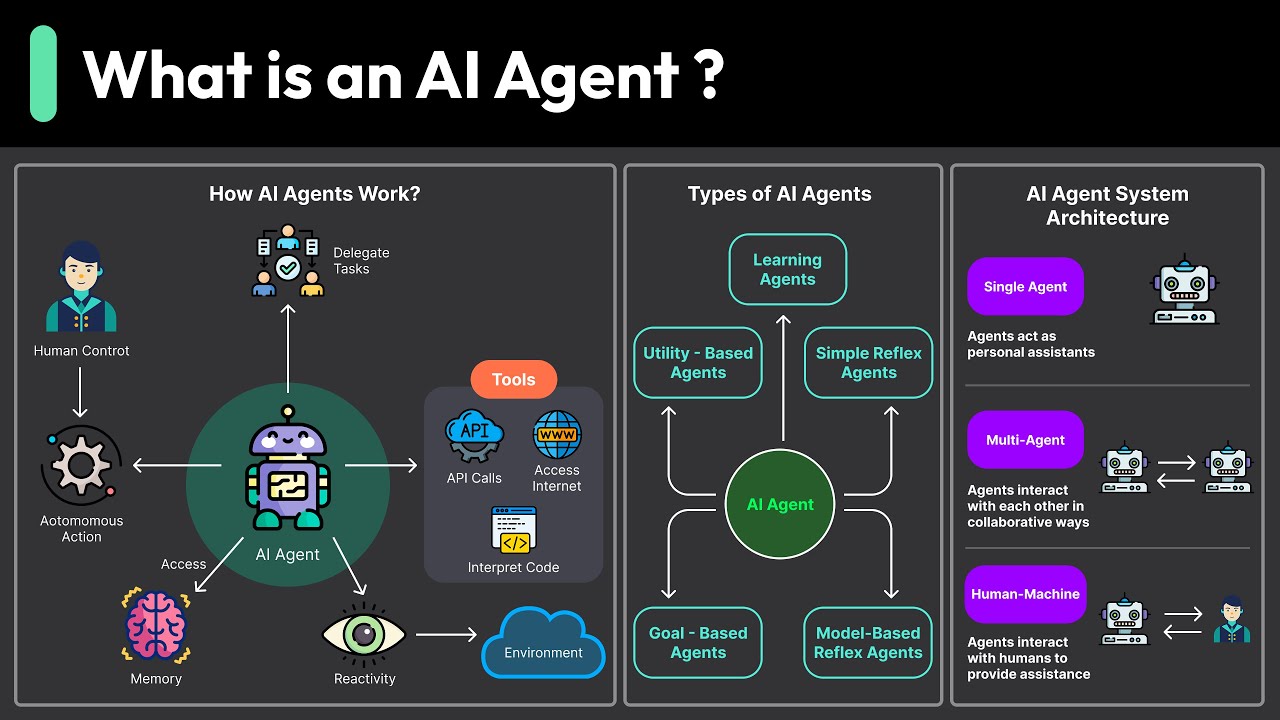
What Are AI Agents and What Are the 5 Types of AI Agents?


What Are AI Agents and What Are the 5 Types of AI Agents?

Artificial Intelligence (AI) has transformed from a futuristic concept into a critical part of modern technology. One of the most foundational ideas in AI is the concept of AI agents—entities that perceive their environment and act upon it to achieve specific goals. These agents power everything from personal assistants like Siri and Alexa to self-driving cars and advanced robotics.

But what exactly are AI agents? How do they function, and what types of AI agents exist? In this comprehensive article, we will explore:

  • What AI agents are
  • The structure of an AI agent
  • The five major types of AI agents
  • Real-world applications of each type
  • Why understanding AI agents is crucial for the future of technology

What Are AI Agents?

An AI agent is any system or entity capable of perceiving its environment through sensors and acting upon that environment using actuators based on intelligent decision-making algorithms. Essentially, an AI agent observes, processes information, and then responds with an action aimed at achieving a defined objective.

Example:

Consider a self-driving car:

  • Sensors: Cameras, LiDAR, GPS, and radar detect road conditions, obstacles, and traffic.
  • Processing Unit: The AI brain interprets this data and makes decisions.
  • Actuators: Control the steering, brakes, and acceleration.

The car, in this case, is an intelligent agent trying to reach its destination safely and efficiently.


Structure of an AI Agent

An AI agent typically includes the following components:

  1. Sensors – Tools for perceiving the environment (e.g., cameras, microphones, thermometers).
  2. Actuators – Tools for acting in the environment (e.g., motors, speakers, screens).
  3. Perception Module – Translates raw data into meaningful representations.
  4. Decision-Making Module – Evaluates options and selects the best course of action.
  5. Learning Module – Improves the agent’s behavior based on experience (in learning agents).
  6. Performance Measure – A metric to assess how well the agent is performing toward its goal.

ai agents

Types of AI Agents

AI agents vary in complexity and capability. Based on how they perceive and act, AI agents are categorized into five types:

1. Simple Reflex Agents

2. Model-Based Reflex Agents

3. Goal-Based Agents

4. Utility-Based Agents

5. Learning Agents

Let’s explore each type in detail.


1. Simple Reflex Agents

Overview:

Simple reflex agents operate based on condition-action rules—if a certain condition is observed, a specific action is taken. These agents do not consider the past or predict future outcomes.

How They Work:

They rely solely on current percepts and ignore the history or context. For example:

  • Rule: If “obstacle detected,” then “turn left.”

Characteristics:

  • Stateless
  • Fast and straightforward
  • Limited intelligence

Real-World Example:

  • Thermostats: If the temperature falls below a threshold, turn the heater on.
  • Basic game AI: Enemy attacks when the player is nearby.

Limitations:

  • Cannot handle complex environments
  • No memory or learning capability

2. Model-Based Reflex Agents

Overview:

Model-based reflex agents maintain an internal model of the world. This model helps them track the current state of the environment, even when all information isn’t directly observable.

How They Work:

They use their current percept and an internal state (built using past perceptions) to make better decisions.

Characteristics:

  • Maintains memory
  • Handles partially observable environments
  • More intelligent than simple reflex agents

Real-World Example:

  • Robot Vacuum Cleaners: Map rooms and remember obstacles.
  • Chatbots: Maintain session history for contextual replies.

Limitations:

  • Still reactive and lacks foresight or goal orientation
  • Requires accurate world modeling

3. Goal-Based Agents

Overview:

Goal-based agents act based on objectives. They evaluate possible actions to determine which will help them achieve a specific goal.

How They Work:

These agents perform search and planning based on current and desired states. They consider multiple future possibilities and select actions that bring them closer to the goal.

Characteristics:

  • Decision-making based on outcomes
  • Can handle complex and dynamic environments
  • Capable of planning

Real-World Example:

  • GPS Navigation Systems: Plan routes from current location to destination.
  • Autonomous Drones: Navigate through obstacles to reach a target.

Limitations:

  • May take longer to make decisions
  • Needs well-defined goals and environments

4. Utility-Based Agents

Overview:

Utility-based agents not only pursue goals but also evaluate which goal is better. They use a utility function to quantify preferences and optimize actions for maximum benefit.

How They Work:

They consider the desirability of different outcomes and choose actions that maximize utility (i.e., happiness, efficiency, safety, etc.).

Characteristics:

  • Handle multiple conflicting goals
  • Provide flexibility in decision-making
  • Consider risk and uncertainty

Real-World Example:

  • Self-Driving Cars: Balance speed, safety, and fuel efficiency.
  • Recommendation Systems: Suggest content based on user preferences and probabilities.

Limitations:

  • Designing an accurate utility function can be difficult
  • High computational cost for optimization

5. Learning Agents

Overview:

Learning agents are the most advanced type. They can learn from experience, improve over time, and adapt to new environments or situations.

How They Work:

They include components like:

  • Learning Element – Improves performance based on feedback.
  • Performance Element – Chooses actions.
  • Critic – Provides feedback on performance.
  • Problem Generator – Suggests exploratory actions to improve learning.

Characteristics:

  • Self-improving over time
  • Can adapt to unknown or changing environments
  • Leverage techniques like machine learning and neural networks

Real-World Example:

  • ChatGPT: Learns from massive data sets and human feedback.
  • AlphaGo: Learned to play Go better than human champions.
  • Smart Assistants: Adapt responses based on user behavior over time.

Limitations:

  • Requires lots of data and processing power
  • May produce unpredictable behavior if not controlled

Comparison of the 5 Types of AI Agents

TypeMemoryLearningGoal-OrientedComplexityExample
Simple ReflexNoNoNoLowThermostat
Model-Based ReflexYesNoNoModerateRobot Vacuum
Goal-BasedYesNoYesHighGPS Navigation
Utility-BasedYesNoYes (Optimized)HigherSelf-driving Car
Learning AgentYesYesYesVery HighAlphaGo, ChatGPT

Applications of AI Agents in the Real World

AI agents are embedded across industries, improving efficiency, accuracy, and user experience. Let’s look at sector-specific use cases:

1. Healthcare

  • Learning Agents: Predict disease outbreaks, assist in diagnosis.
  • Utility-Based Agents: Optimize treatment plans based on patient data.

2. Finance

  • Goal-Based Agents: Monitor transactions to detect fraud.
  • Learning Agents: Predict market trends for algorithmic trading.

3. Retail and E-commerce

  • Model-Based Agents: Handle customer service via chatbots.
  • Utility-Based Agents: Recommend products based on past behavior.

4. Transportation

  • Goal-Based Agents: Route optimization for logistics.
  • Learning Agents: Adaptive traffic control systems.

5. Smart Homes

  • Simple Reflex Agents: Control lights, thermostats based on sensors.
  • Model-Based and Utility Agents: Learn preferences to automate comfort.

Why It’s Important to Understand AI Agents

Understanding the types of AI agents is essential for developers, businesses, and everyday users. Here’s why:

For Developers:

  • Helps in designing more efficient and appropriate AI systems based on the problem.

For Businesses:

  • Enables smarter investment in AI technologies that align with goals.

For Society:

  • Promotes responsible use of AI, ensuring transparency, fairness, and safety.

The Future of AI Agents

The evolution of AI agents is heading toward more autonomous, ethical, and human-like systems. Future AI agents will likely:

  • Understand emotional intelligence
  • Collaborate with humans in complex decision-making
  • Learn in real time with fewer resources
  • Operate with built-in ethics and value systems

As General Artificial Intelligence (AGI) becomes a possibility, AI agents will shift from narrow tasks to multi-domain adaptability, ushering in a new era of human-AI collaboration.


Conclusion

AI agents are the building blocks of intelligent systems. Whether it’s a basic thermostat or a sophisticated learning model like ChatGPT, AI agents power countless applications that shape our daily lives.

The five types of AI agents—Simple Reflex, Model-Based Reflex, Goal-Based, Utility-Based, and Learning Agents—represent a progression in complexity and capability. Each type has its use cases, strengths, and limitations.

As AI continues to evolve, so too will the design, ethics, and intelligence of these agents. Understanding them not only prepares us for the technological future but also empowers us to shape it wisely and responsibly.

Is Artificial Intelligence Accessible?


Is Artificial Intelligence Accessible?

Introduction

Artificial intelligence (AI) has emerged as one of the most transformative technologies of our time. From voice assistants like Siri and Alexa to advanced machine learning models that predict diseases and optimize businesses, AI has rapidly become woven into the fabric of daily life. But as this technology grows ever more sophisticated, a critical question arises: Is artificial intelligence accessible to everyone?

Accessibility, in this context, can mean many things. It refers to whether AI tools are affordable, whether they’re easy to use, whether they respect diverse languages and cultures, and whether they can be employed by people with varying abilities. To put it simply: Does AI empower everyone, or is it creating new divides?

In this article, we’ll explore what it means for AI to be accessible — across technical, social, and ethical dimensions — and examine the steps needed to make sure that as AI advances, nobody is left behind.


Understanding AI Accessibility

When we talk about accessibility, especially in the tech world, we often mean making products and services usable by as many people as possible — including those with disabilities. But AI accessibility is much broader. It also includes affordability, availability across different geographies and socioeconomic classes, multilingual and cultural adaptation, and usability for people who may not have a technical background.

Here are some of the key pillars to examine:

1. Technical Accessibility

This is about making AI tools available to a diverse range of people regardless of technical skill level. Many advanced AI solutions require programming knowledge, understanding of machine learning principles, and computing power — none of which everyone can easily access. However, the rise of “no-code” and “low-code” platforms is helping democratize AI by allowing non-experts to implement solutions like chatbots, predictive analytics, and image classifiers without needing to write complex code.

Tools like Google’s AutoML and Microsoft’s Power Platform have begun to bridge the gap, making it easier for small businesses and individuals to leverage AI. However, the learning curve is still steep for people who are new to technology.

2. Financial Accessibility

AI has traditionally been expensive to develop and deploy. Big companies like Google, Microsoft, and Amazon have dominated the AI scene, utilizing massive datasets and computing clusters that are beyond the reach of most small businesses and individuals. Fortunately, the emergence of open-source models and cloud-based AI services is gradually making this more affordable.

For example:

  • Hugging Face provides pre-trained language models that can be fine-tuned at a low cost.
  • Google Cloud, AWS, and Azure offer AI-as-a-service models that let businesses pay only for what they use.

That said, AI tools still require some level of investment, especially if they involve data labeling, hosting, or customization. Reducing these costs is an ongoing challenge — and one that must be met if AI is to truly benefit all.

3. Language and Cultural Accessibility

AI must also overcome language and cultural barriers. Many models — especially large language models like GPT or BERT — have been trained mostly on English-centric datasets, meaning they perform less accurately for people who speak underrepresented languages or dialects.

There is progress on this front:

  • Meta AI, for instance, has invested in translation research to make AI available for 200+ languages.
  • Projects like Mozilla Common Voice encourage people to contribute voice data for underrepresented languages so that speech AI can recognize diverse accents.

Despite these efforts, there’s still a significant digital divide. Many cultures are underrepresented in AI training data, leading to biased or irrelevant results. True accessibility means making sure AI solutions reflect the world’s diverse linguistic and cultural landscape.

4. Physical and Cognitive Accessibility

When people think of accessibility, they often picture tools for those with physical or cognitive impairments. AI can be incredibly empowering in this regard:

  • AI-driven voice assistants help people with mobility impairments control their environment.
  • AI-powered real-time captioning enables people with hearing impairments to follow conversations and videos.
  • Text-to-speech AI benefits people with dyslexia or visual impairments.

Yet not all AI tools are designed with these needs in mind. User interfaces often remain overly complex or incompatible with screen readers. AI companies need to follow universal design principles so that their products work for as many people as possible by default.


Barriers to AI Accessibility

Despite progress, significant barriers remain that prevent AI from reaching its full potential as an accessible tool:

1. Data Privacy and Trust Issues

AI often relies on massive datasets, some containing personal and sensitive information. Many people — especially those from historically marginalized communities — distrust AI companies due to fears of data misuse, bias, or surveillance. To improve accessibility, companies must earn trust by prioritizing data security, obtaining informed consent, and ensuring transparency about how data is used.

2. Algorithmic Bias and Exclusion

If the data that trains AI is biased, then the AI itself will be biased. This can mean facial recognition tools that don’t work well for darker-skinned people, predictive policing algorithms that target minority neighborhoods unfairly, or language models that produce offensive outputs. Reducing bias is crucial for making AI accessible to all, as biased AI reinforces inequalities rather than breaking them down.

3. Poorly Designed Interfaces

For AI to be truly accessible, its interface must be intuitive and accessible to everyone, including people with disabilities. Too often, AI tools come with complicated setups, jargon-heavy instructions, and visual designs that can be difficult for people with low vision to navigate. Accessibility guidelines like WCAG (Web Content Accessibility Guidelines) exist for this reason — AI companies need to follow these closely.

4. Lack of Inclusive Participation

AI’s current accessibility issues often stem from who builds it. Historically, AI teams have been homogenous, mostly drawn from wealthy, tech-savvy societies. This lack of diversity means that AI solutions don’t always reflect diverse needs. To make AI accessible, we need people of different genders, races, cultures, and socioeconomic classes involved in its design and deployment.


Steps to Make AI More Accessible

If we want AI to serve everyone, action must happen across the industry, policy, and society. Here are a few concrete steps that can make AI more accessible:

1. Invest in AI Literacy

AI tools will only be as accessible as people’s understanding of them. Schools, community centers, and workplaces can help by offering training that covers AI basics. Even simple, engaging workshops on machine learning principles can empower people to understand, trust, and use AI.

2. Develop AI for Diverse Populations

Data diversity is key. Researchers and companies must make sure that training data is representative of the world’s cultural, linguistic, and demographic richness. This reduces bias and improves accuracy for diverse user groups.

3. Simplify AI Interfaces

Designing intuitive user interfaces — ideally tested with people from all backgrounds — will help make AI more accessible. Whether this means voice-first designs for people who cannot type or making sure an app is easily navigable with screen readers, the goal must be usability for everyone.

4. Adopt Transparent and Ethical AI Practices

Public trust will grow if companies and governments follow transparent, ethical principles. Implementing fair data policies, being clear about the purpose of AI tools, and offering opt-out options give people control and confidence.

5. Encourage Open-Source Collaboration

Open-source AI frameworks like TensorFlow, PyTorch, and Hugging Face lower the financial barrier to entry. Encouraging collaboration across organizations and countries can make innovation more accessible and help democratize AI expertise.


Conclusion: Towards Truly Accessible AI

Is artificial intelligence accessible? Right now, the honest answer is: it’s improving but still has a long way to go. There are promising signs — AI is being adopted in assistive tools for people with disabilities, making complex technologies more user-friendly, and reaching new languages and cultures. But significant obstacles remain in terms of cost, data bias, trust, representation, and usability.

Moving forward, accessibility must be a primary design goal for AI. That means listening to diverse communities, investing in education and inclusive data, and creating tools that adapt to everyone’s needs — regardless of their background or skill level.

By making these investments, we can ensure that AI is not just powerful for some, but empowering for all. Accessible AI holds the promise to uplift millions and to help shape a more just and inclusive world. Let’s make sure that future is within everyone’s reach.


Would you also like me to add sections on AI accessibility policy, or include real-world examples like accessible AI tools already on the market? Let me know if you’d like me to expand this further!

Can AI Optimize SEO?


Step-by-Step Guide to Using AI for Effective SEO Strategies

In the ever-evolving world of digital marketing, Search Engine Optimization (SEO) remains a cornerstone of online visibility and success. As competition increases and algorithms become more complex, marketers and website owners constantly seek ways to streamline their SEO strategies. Enter Artificial Intelligence (AI)—a transformative force that’s reshaping how we approach SEO.

AI is not just a buzzword; it’s actively changing the way websites are analyzed, content is created, keywords are discovered, and rankings are improved. But can AI truly optimize SEO? The short answer is yes—and it already is. This article explores how AI enhances SEO, the tools it powers, the benefits and limitations of AI in SEO, and what the future holds.


What is AI in SEO?

Artificial Intelligence in SEO refers to the use of machine learning algorithms, natural language processing (NLP), and data-driven automation to improve search engine visibility. AI can understand content like a human, analyze search intent, adapt to ranking algorithms, and predict outcomes.

Instead of manually performing time-consuming SEO tasks, marketers can use AI-powered tools to:

  • Analyze large datasets
  • Optimize content
  • Automate keyword research
  • Track and improve rankings
  • Generate content
  • Understand user behavior

How AI is Revolutionizing SEO

1. Automated Keyword Research and Clustering

Traditional keyword research involved manual searching and spreadsheet work. With AI tools, keyword discovery has become faster and more efficient. AI not only finds relevant keywords but also clusters them by intent and topic.

  • AI tools like SEMrush, Surfer SEO, Ahrefs, and Clearscope analyze billions of search queries to suggest high-potential keywords.
  • They group keywords based on semantic relationships, ensuring content targets broad and specific queries.

This allows SEO professionals to create more targeted and relevant content strategies.


2. Content Creation and Optimization

One of the most talked-about uses of AI in SEO is content creation. Tools like ChatGPT, Jasper, and Copy.ai can generate content ideas, outlines, or full articles based on a few prompts.

AI also optimizes existing content by:

  • Analyzing top-ranking pages
  • Suggesting content structure and length
  • Inserting relevant keywords naturally
  • Improving readability and tone

Natural Language Processing (NLP) enables AI to understand the context of words and phrases, making content not just keyword-rich but also user-friendly and engaging.


3. Search Intent Matching

Google’s algorithm increasingly focuses on search intent—why the user made a query. AI tools are able to categorize queries as:

  • Informational (looking for knowledge)
  • Navigational (seeking a specific page)
  • Transactional (ready to buy or act)

AI helps match content to the right search intent, increasing the chance of ranking higher. For example, if a user searches for “best running shoes,” AI tools help create content that compares products, includes user reviews, and contains buying guides—precisely what the user wants.


4. On-Page SEO Optimization

AI assists with technical and on-page SEO tasks, such as:

  • Optimizing title tags, headers, and meta descriptions
  • Generating schema markup (structured data)
  • Ensuring proper keyword density
  • Identifying internal linking opportunities

AI tools scan your content and compare it to top-performing competitors. For example, Surfer SEO gives real-time feedback on your article’s optimization level.


5. Voice Search and Conversational SEO

With the rise of smart assistants like Alexa, Siri, and Google Assistant, voice search optimization has become critical. AI helps tailor content for voice queries, which tend to be longer and more conversational.

Example: Instead of targeting “best budget smartphone,” AI suggests optimizing for “What is the best budget smartphone under $300?”

This conversational shift is powered by Natural Language Understanding (NLU), a branch of AI that interprets how people naturally speak.


6. SEO Audit and Monitoring

AI simplifies website audits by scanning and identifying technical issues in seconds:

  • Broken links
  • Duplicate content
  • Slow loading pages
  • Missing meta tags
  • Crawl errors

Tools like Screaming Frog, Sitebulb, and DeepCrawl use AI-based algorithms to provide detailed recommendations.

Moreover, AI monitors changes in your site’s rankings, traffic, backlinks, and competitors. It can alert you when your page drops or when a new competitor is climbing the ranks—enabling real-time optimization.


7. Link Building and Backlink Analysis

Backlinks remain a strong ranking factor. AI tools help:

  • Discover link-building opportunities
  • Analyze competitors’ backlink profiles
  • Identify toxic backlinks
  • Reach out to high-authority domains

For example, Ahrefs uses AI to track over 12 trillion links and offers actionable insights on where and how to gain quality backlinks.


8. User Experience (UX) and Behavioral Data

Google now considers Core Web Vitals, which measure real-world UX: loading speed, interactivity, and visual stability.

AI tools analyze:

  • Bounce rate
  • Click-through rate (CTR)
  • Time on site
  • Scroll depth

By interpreting user behavior, AI can suggest layout changes, improve mobile responsiveness, and reduce friction points—boosting both SEO and conversions.


Popular AI-Powered SEO Tools

Here are some widely-used AI tools revolutionizing SEO:

ToolKey Features
Surfer SEOContent editor, keyword suggestions, SERP analyzer
Jasper AIAI content generation and writing assistant
ClearscopeNLP-based content optimization and keyword scoring
MarketMuseContent planning, topic modeling, and competitive analysis
FraseAI-generated answers, content briefs, and question-based optimization
ChatGPTContent ideation, writing drafts, FAQs, schema suggestions
SEMrush/AhrefsKeyword intelligence, backlink analysis, and site audits

Benefits of AI in SEO

1. Efficiency

AI drastically reduces the time spent on keyword research, content audits, and performance tracking.

2. Scalability

Marketers can scale their SEO efforts across hundreds of pages and topics without manual labor.

3. Data-Driven Decisions

AI bases decisions on millions of data points, reducing guesswork and enhancing accuracy.

4. Personalization

AI enables the creation of personalized content experiences based on user behavior and preferences.

5. Adaptability

As search engine algorithms evolve, AI tools adapt by learning from the latest data trends.


Limitations and Challenges of AI in SEO

Despite its advantages, AI isn’t a magic bullet. Here are some limitations:

1. Dependence on Data Quality

AI is only as good as the data it’s trained on. Poor data can lead to incorrect insights.

2. Lack of Creativity

AI tools may struggle with creativity, humor, or storytelling that connects emotionally with readers.

3. Over-Optimization Risks

Excessive reliance on keyword tools can lead to robotic or keyword-stuffed content, which Google may penalize.

4. Algorithm Black Boxes

AI tools don’t always explain why they make certain suggestions, which can be frustrating for marketers wanting control.

5. Human Oversight Required

AI should assist, not replace, human judgment. Editorial oversight ensures quality, tone, and brand voice remain intact.


The Future of AI in SEO

As AI technology matures, its role in SEO will become more advanced and intuitive. Here are some future trends:

1. Predictive SEO

AI will forecast search trends, user behavior, and traffic patterns—allowing marketers to act before changes occur.

2. Hyper-Personalized Content

Using AI, websites will tailor every page based on the visitor’s intent, behavior, and preferences.

3. Autonomous SEO

Fully automated AI systems might manage end-to-end SEO workflows—audits, fixes, content creation, and link building.

4. Visual and Multimodal SEO

AI will enhance image and video SEO by understanding visuals (via computer vision) and suggesting improvements.

5. Ethical and Responsible AI SEO

As AI becomes ubiquitous, transparency and ethical use of automation in content and SEO will be a priority.


Conclusion

So, can AI optimize SEO? Absolutely. AI has already proven to be a powerful ally for marketers, bloggers, and businesses seeking better visibility, performance, and content quality. From automating technical audits to generating content ideas and interpreting search intent, AI touches every corner of modern SEO.

However, while AI enhances and accelerates SEO efforts, it doesn’t replace the need for human creativity, strategy, and oversight. The most successful SEO strategies will be those that blend AI efficiency with human expertise, resulting in authentic, optimized, and user-focused experiences.

In the future, the collaboration between marketers and machines will not just be an advantage—it will be a necessity. Embracing AI in your SEO toolkit today ensures your digital presence thrives in tomorrow’s competitive landscape.