Category: Business

  • Home
  • Category: Business

Google’s New Foldable, Smartwatch Emphasize AI Rather Than Hardware Changes

A Strategic Shift Toward AI Innovation Over Hardware Design

In the fast-evolving world of consumer technology, 2025 is shaping up to be the year when artificial intelligence takes center stage. Leading the charge is Google, which recently unveiled its next-generation foldable smartphone and smartwatch. Unlike past product cycles, where new devices were defined by radical hardware redesigns, this year’s upgrades highlight a different story: AI is now the main attraction.

A Subtle but Strategic Shift

Google’s latest announcements showcase a deliberate move away from flashy physical upgrades and toward seamless AI integration. The new foldable smartphone — the Pixel Fold 2 — and the upgraded Pixel Watch 3 offer refined hardware, but the biggest changes are in the intelligence built into these devices.

Rather than relying on dramatic design overhauls, Google has fine-tuned its AI systems to power smarter experiences. This approach aligns perfectly with the company’s broader vision of building devices that learn, adapt, and assist users in more personalized ways.

AI Takes the Spotlight

The real star of the show is Google’s advanced AI ecosystem, powered by Google Gemini. Users can now experience features that go far beyond simple voice commands:

  • On-device generative AI: Tasks like summarizing lengthy emails, drafting messages, or translating documents happen directly on the device without cloud processing.
  • Proactive assistance: Instead of users having to ask, the phone anticipates needs — offering suggestions, calendar reminders, or contextual insights based on habits.
  • Visual understanding: Using AI-powered camera intelligence, the foldable can identify and describe scenes, scan documents with precision, and translate text in real time.

These capabilities make the phone and smartwatch feel less like tools and more like intelligent companions.

Pixel Fold 2: Smarter, Not Just Sleeker

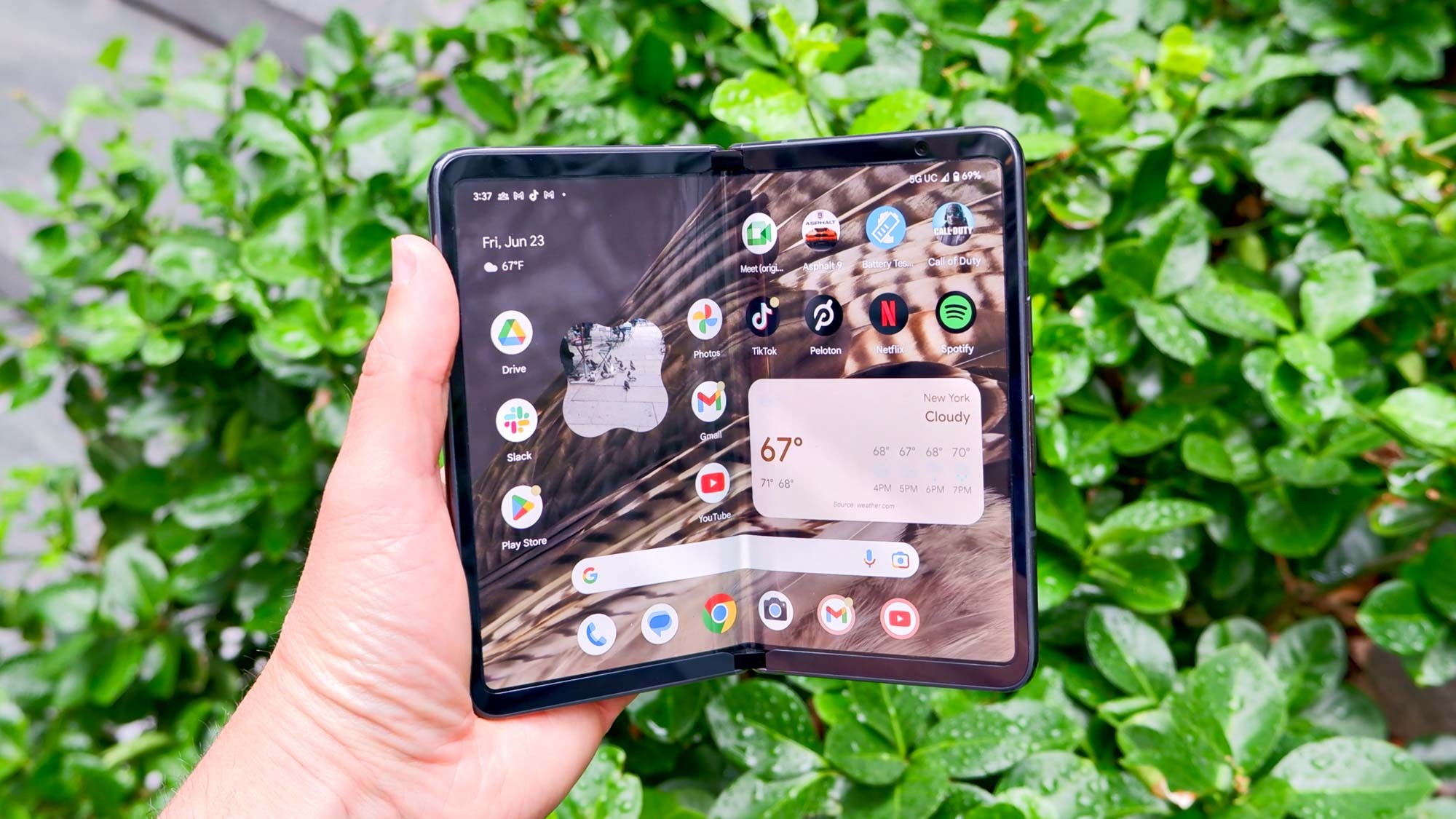
The Pixel Fold 2 retains its iconic folding design but incorporates subtle refinements like slimmer bezels and a brighter display. What’s new is how AI enhances the user experience:

  • Adaptive Display Intelligence: The screen adjusts its layout and content dynamically depending on the user’s activity, making multitasking more intuitive.
  • AI Multitasking: Users can run multiple apps simultaneously with AI automatically resizing windows for the most efficient layout.
  • Live Interpreter Mode: Real-time language translation on split-screen is faster and more accurate, making it a powerful tool for travelers and professionals alike.

This evolution signals Google’s belief that a better phone isn’t just about faster chips or flashier designs — it’s about smarter functionality.

Pixel Watch 3: Your AI Health Companion

The Pixel Watch 3 also sees a similar AI-first philosophy. While the watch sports a slightly refined design with improved battery life, the big leap comes in its software:

  • AI-Powered Wellness Insights: Beyond tracking steps or heart rate, the watch interprets data patterns to provide predictive health suggestions.
  • Smarter Notifications: Using contextual awareness, it prioritizes alerts that truly matter — learning from user behavior over time.
  • Real-Time Coaching: The AI can give live feedback during workouts, helping users improve their form and endurance.

With these features, Google positions its smartwatch not just as a fitness tracker, but as a personal wellness assistant.

Competing Through Intelligence

This strategic pivot places Google in a strong position against competitors like Apple and Samsung, which have traditionally emphasized hardware innovation. By doubling down on AI, Google is setting a new benchmark: the future of mobile technology is not in how devices look, but in how smartly they work.

The integration of Gemini across devices also means users benefit from a unified AI experience. Whether on the foldable phone or smartwatch, AI learns and adapts holistically, creating a seamless digital ecosystem.

Privacy and On-Device AI

One of the standout aspects of Google’s new strategy is the emphasis on on-device processing. Sensitive tasks like health tracking, personal reminders, and communication summarization happen locally on the device. This not only boosts speed but also strengthens privacy — a growing concern among consumers.

The Bigger Picture

Google’s latest hardware launch isn’t just about new gadgets; it’s a clear statement about where the tech industry is headed. As AI becomes more advanced, devices will increasingly fade into the background — acting as smart, personalized assistants that understand and respond intuitively.

By prioritizing intelligence over aesthetics, Google is betting that the next wave of consumer adoption will be driven by how seamlessly AI improves daily life.


google-fold

Google’s New Foldable and Smartwatch Put AI Front and Center Instead of Hardware Upgrades

In the global technology race, artificial intelligence (AI) has become the defining force shaping the next generation of devices. Gone are the days when consumers rushed to buy a new phone just because it had a slightly better camera or a sleeker screen. The real transformation is now happening inside the devices — through advanced intelligence. And no company embodies this shift more clearly right now than Google.

In its latest product launch, Google unveiled two highly anticipated devices: the Pixel Fold 2 and the Pixel Watch 3. While both products offer subtle hardware refinements, the biggest story isn’t the design. It’s the deep AI integration that transforms how users interact with technology.


A Strategic Shift Toward AI Innovation Over Hardware Design

Every major smartphone launch for the past decade has focused on physical features: brighter screens, more powerful processors, improved battery life, or enhanced camera lenses. Google’s 2025 lineup breaks from that tradition. Instead of promoting hardware as the star of the show, the company is positioning AI as the real differentiator.

This shift is not accidental. With AI models like Google Gemini becoming more capable, Google sees an opportunity to build devices that are not just faster or thinner — but smarter and more personal. In other words, the device becomes less of a tool you command and more of an assistant that understands and anticipates your needs.


Gemini AI at the Core of the Experience

The new devices are powered by Gemini, Google’s most advanced AI model to date. Instead of relying on cloud processing alone, Gemini now works natively on-device, enabling faster, more private, and more responsive experiences.

Key AI Advancements Include:

  • On-Device Generative AI: Summarizing long articles, drafting emails, or translating complex documents now happens locally, without needing an internet connection.
  • Contextual Intelligence: The device learns user behavior over time — offering suggestions before the user even asks. For example, suggesting a call before a scheduled meeting or pulling up relevant documents automatically.
  • Multimodal Understanding: Gemini processes text, voice, images, and gestures in real time, allowing for natural, fluid interactions.
  • Real-Time Language Translation: The new foldable turns into a live interpreter with split-screen translation that’s faster and more accurate than ever.

These features don’t just add convenience; they transform how users experience technology.


Pixel Fold 2: A Foldable Designed Around AI

When the first Pixel Fold launched, it was praised for its design and multitasking capabilities. The second generation builds on that foundation but focuses more on intelligence than aesthetics.

1. Refined Hardware, Subtle Design Upgrades

The Pixel Fold 2 features slimmer bezels, a brighter and more power-efficient display, and improved durability at the hinge. But these are incremental changes. The real excitement comes from the adaptive software layer that uses AI to optimize how the device functions.

2. Adaptive Display Intelligence

The display dynamically adjusts layout based on user activity. If you’re reading, the AI will declutter the interface and highlight key text. If you’re multitasking, it will resize and rearrange windows intelligently.

3. AI Multitasking Engine

Forget dragging and resizing apps manually. With AI assistance, the Fold 2 automatically opens complementary apps side by side — like your calendar with your email or maps with your travel itinerary.

4. Smarter Camera Capabilities

The camera system gets a powerful AI boost. Real-time scene detection can identify landmarks, suggest photo enhancements, and even provide instant visual translations. For content creators, AI-powered framing ensures the perfect shot, even when shooting solo.

5. Travel and Work Companion

The Live Interpreter Mode turns the foldable into a portable translator. Whether at a business meeting abroad or exploring a new country, users can communicate effortlessly across languages.


Pixel Watch 3: The AI Health and Lifestyle Assistant

The wearable market has long focused on fitness tracking, but the Pixel Watch 3 takes a more holistic AI-driven approach.

1. Smarter Health Insights

Instead of just counting steps or heart rate, the AI interprets your data in context. It can spot early patterns of stress, fatigue, or irregular sleep, then provide personalized recommendations to improve well-being.

2. Real-Time AI Coaching

The watch delivers live coaching during workouts. For example, if you’re running, the AI can analyze your stride and breathing patterns to help optimize performance. It’s like having a personal trainer on your wrist.

3. Predictive Wellness

If the system detects unusual health trends — such as declining sleep quality or increased stress levels — it proactively notifies the user and suggests recovery plans like hydration, breathing exercises, or schedule adjustments.

4. Smarter Notifications

Using contextual AI, the watch filters and prioritizes alerts. If you’re in a meeting, it may mute social updates but ensure critical work notifications still come through.


Competing Through Intelligence: A New Battlefield

For years, smartphone and wearable competition was defined by who had the better screen, camera, or battery. With the rise of AI, the battleground is shifting to intelligence. Google is now competing with companies like Apple and Samsung not just on design but on how well devices understand and assist users.

While Apple has made progress integrating intelligence into its ecosystem, Google’s advantage lies in deep AI-native integration. Gemini is built directly into Android, enabling a level of speed and personalization that cloud-based assistants can’t match.

This gives Google a strategic edge in defining what the “smart” in smartphones and smartwatches really means.


AI Integration Across the Ecosystem

One of Google’s strongest moves is how seamlessly its AI features work across devices. The Pixel Fold 2 and Pixel Watch 3 share data intelligently (with privacy protections in place), ensuring a unified user experience.

  • Example: If your watch detects elevated stress levels, it might automatically suggest calming music on your foldable phone.
  • Example: If you start reading an article on your foldable, your watch can summarize it aloud while you’re on the go.
  • Example: Calendar events, health reminders, and travel updates sync intelligently without the need for user input.

This level of integration reflects Google’s long-term strategy: AI as the glue that binds the ecosystem together.


Privacy and On-Device Processing: A Key Differentiator

A major consumer concern with AI-powered devices is privacy. Google is addressing this head-on by making Gemini work primarily on-device.

This means:

  • Sensitive information like health data, personal messages, and reminders is processed locally.
  • Fewer data points need to be sent to the cloud, reducing exposure risk.
  • Faster processing with minimal latency improves user experience.

Google also provides transparent privacy dashboards, allowing users to control what data is collected and how it’s used.


A Broader Industry Trend

Google’s AI-first strategy is part of a larger industry trend. Instead of massive leaps in physical design, we’re seeing companies invest heavily in AI to make devices smarter, more personalized, and more context-aware.

  • AI assistants are evolving from reactive tools to proactive partners.
  • Health and wellness are becoming more predictive rather than merely diagnostic.
  • Productivity features are becoming more automated and anticipatory, reducing user effort.

This reflects a fundamental shift in how we define innovation. It’s not about what a device looks like anymore, but how intelligently it works for you.


Consumer Reactions and Market Impact

Early reviews and tech analyst predictions suggest that this launch could significantly strengthen Google’s position in the premium smartphone and wearable market.

  • Early adopters are praising the AI responsiveness and contextual understanding of the devices.
  • Tech reviewers note that while the design changes are modest, the user experience feels transformational.
  • Market analysts predict increased adoption rates, particularly among professionals and frequent travelers who value smart features over aesthetics.

Google’s decision to focus on AI may also push competitors to accelerate their own AI integration, creating a new wave of intelligent devices across the industry.


The Future: Devices That Understand You

Imagine a world where your phone knows when you’re running late and sends updates automatically. Or your watch detects early signs of stress and adjusts your daily plan accordingly. This isn’t science fiction anymore — it’s the direction Google is heading with Gemini-powered devices.

As AI models continue to evolve, we can expect:

  • More natural interaction between users and devices (voice, gesture, context).
  • Greater personalization based on individual habits and preferences.
  • Stronger privacy frameworks to protect sensitive information.
  • Seamless multi-device collaboration powered by a shared AI core.

Final Thoughts: AI Over Aesthetics Is the New Normal

The launch of the Pixel Fold 2 and Pixel Watch 3 marks a pivotal moment not just for Google, but for the entire tech industry. It signals a future where intelligence takes precedence over appearance, and where innovation is measured not in megapixels or millimeters but in meaningful, predictive experiences.

By putting AI at the center of its hardware strategy, Google isn’t just selling devices — it’s building an intelligent ecosystem designed to understand, assist, and adapt to its users.

This AI-first approach could redefine what it means to own a “smart” device. And as other tech giants follow suit, one thing is clear: the future of technology won’t be shaped by how devices look… but by how well they think.

The Pixel Fold 2 and Pixel Watch 3 may not revolutionize hardware design, but they represent something more significant: a paradigm shift in how technology companies think about innovation. Google’s focus on integrating Gemini AI across devices transforms the user experience into something more fluid, personal, and anticipatory.

As the line between hardware and software blurs, one thing becomes clear — the smartest device is the one that knows you best.

The Impact of Digital Marketing on Businesses: Transforming Growth in the Digital Age


The Impact of Digital Marketing on Businesses: Transforming Growth in the Digital Age

In today’s digital-first world, businesses must adapt to thrive. The era of relying solely on billboards, cold calls, and print ads has given way to a more targeted, measurable, and efficient approach: digital marketing. Whether you run a small local bakery or a global tech firm, digital marketing has become a game-changer in how companies engage with customers, increase sales, and compete in the marketplace.

This article explores the impact of digital marketing on businesses, breaking down the transformative benefits, real-world examples, challenges, and future outlook for companies embracing this digital evolution.


📱 What is Digital Marketing?

Digital marketing refers to promoting products or services using digital channels such as websites, search engines, social media, email, mobile apps, and online advertising. Unlike traditional marketing, which casts a broad net, digital marketing enables businesses to reach specific target audiences with personalized content.

Key Digital Marketing Channels Include:

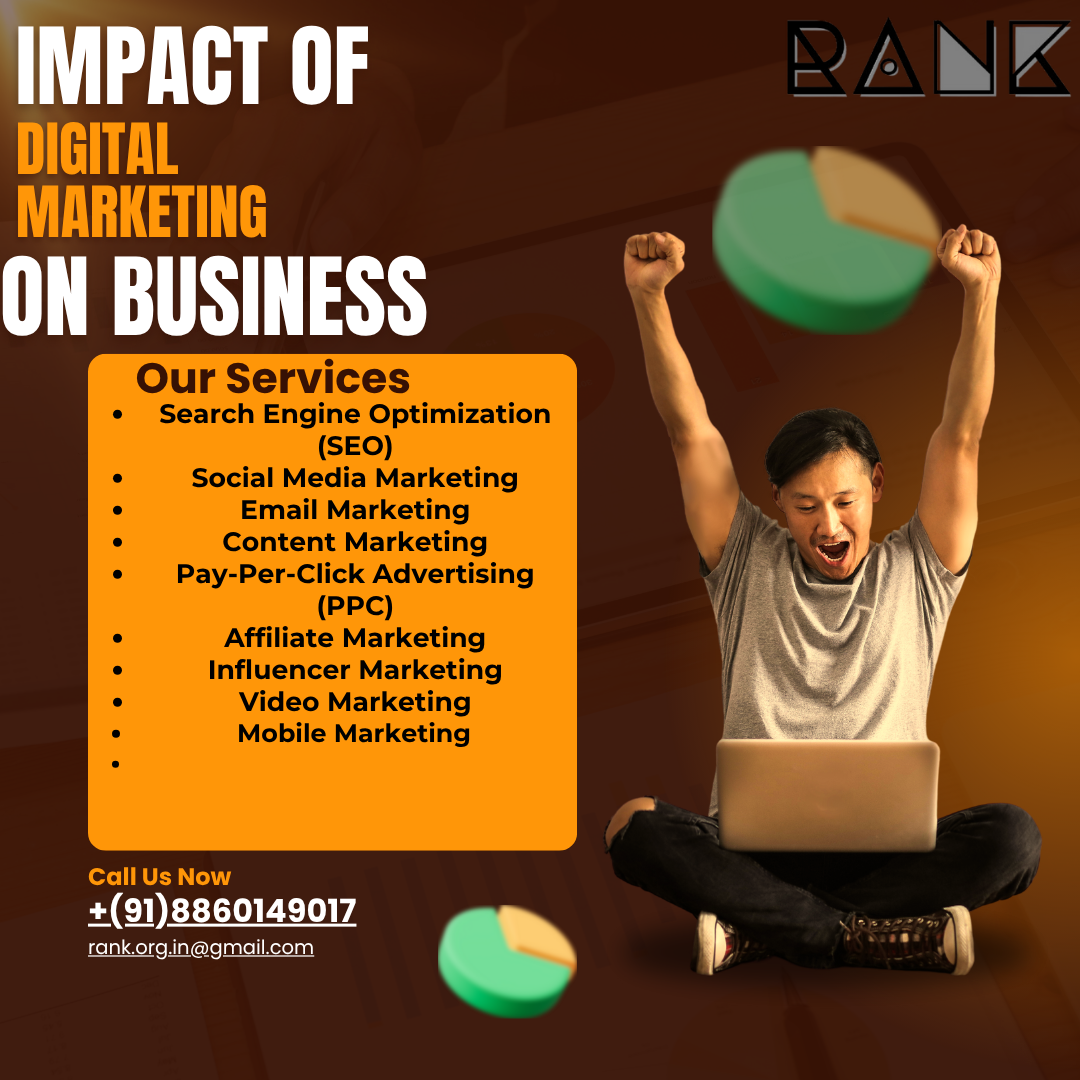
  • Search Engine Optimization (SEO)
  • Social Media Marketing
  • Email Marketing
  • Content Marketing
  • Pay-Per-Click Advertising (PPC)
  • Affiliate Marketing
  • Influencer Marketing
  • Video Marketing
  • Mobile Marketing

💼 Why Digital Marketing Matters for Businesses

Digital marketing is not just a trend—it is the backbone of modern business strategy. Companies that invest in digital channels enjoy greater brand visibility, improved customer engagement, and higher ROI.

Major Impacts of Digital Marketing on Businesses:

1. Increased Global Reach

Traditional marketing limits businesses to local or regional visibility. Digital marketing erases geographical barriers, enabling companies to access a global audience with just a website or social media profile.

  • A small craft business in India can sell to customers in the U.S. via Etsy or Amazon.
  • Online language tutors can market globally using SEO and YouTube content.

2. Cost-Effective Marketing

Digital marketing is significantly more affordable than traditional media such as television or print. Platforms like Facebook Ads or Google Ads offer flexible budgets and advanced targeting, making them accessible even for startups.

  • Email marketing yields an average ROI of $42 for every $1 spent.
  • Social media allows for free organic promotion and community building.

3. Targeted and Personalized Campaigns

Digital tools allow businesses to segment audiences based on demographics, behavior, interests, and more. This leads to more personalized content and higher conversion rates.

  • Facebook Ads let you target users by age, job, behavior, and even device type.
  • Email marketing platforms can personalize messages using user history and preferences.

4. Measurable Results and Analytics

One of the biggest impacts of digital marketing is the ability to measure results in real time. With platforms like Google Analytics, businesses can track user behavior, page visits, bounce rates, conversions, and ROI instantly.

  • A/B testing can determine which campaign performs better.
  • Heatmaps and user flow tools help optimize user experience.

5. Improved Customer Engagement

Digital platforms foster two-way communication. Businesses can now engage with customers via comments, messages, live chats, and reviews.

  • Responding to a tweet or Instagram DM builds brand loyalty.
  • Chatbots help resolve queries 24/7, enhancing customer satisfaction.

🧠 Impact of SEO and Content Marketing

Search Engine Optimization (SEO)

SEO helps businesses improve visibility on Google and other search engines. With over 90% of online experiences beginning with a search, ranking high in search results is critical.

  • A local salon appearing in the top 3 Google results sees more walk-ins.
  • B2B software companies can attract leads with keyword-optimized blog posts.

Content Marketing

Content is the foundation of digital marketing. Creating blogs, infographics, videos, and podcasts helps businesses build authority and trust.

  • Companies with blogs generate 67% more leads than those without.
  • Helpful content improves SEO rankings and customer retention.

📣 Social Media Marketing’s Role in Business Growth

Social media platforms like Facebook, Instagram, LinkedIn, and TikTok provide businesses with a direct line to their target audience.

Key Benefits:

  • Build brand awareness through consistent posting and storytelling
  • Run targeted ads with measurable ROI
  • Collaborate with influencers to access new audiences
  • Gather customer feedback through polls and comments

Case Example:
Nike uses Instagram not only to promote shoes but also to inspire followers with athlete stories and behind-the-scenes content—strengthening its brand and driving conversions.


📧 The Power of Email Marketing

Email marketing continues to be one of the most effective digital marketing tools for businesses.

Key Impacts:

  • Nurtures leads through personalized email sequences
  • Drives repeat purchases with discount and loyalty emails
  • Re-engages inactive customers with automated campaigns

Example:
E-commerce brands like Amazon send tailored recommendations based on browsing and purchase history, increasing upsell opportunities.


💰 PPC and Online Advertising Impact

Pay-Per-Click (PPC) advertising offers immediate visibility on search engines and websites.

Benefits:

  • Fast lead generation
  • Budget control and audience targeting
  • Clear performance metrics

Google Ads and Meta Ads allow businesses to reach people at the right time with the right message. Combined with retargeting, these tools help maximize ROI and reduce customer acquisition costs.


📈 Real-World Business Benefits of Digital Marketing

1. Small Business Growth

Digital marketing levels the playing field. A small café can compete with a large chain through smart use of Google Maps SEO, Instagram Reels, and influencer shoutouts.

2. B2B Lead Generation

LinkedIn ads, white papers, webinars, and email funnels help B2B companies attract and convert high-ticket clients efficiently.

3. E-Commerce Expansion

Brands like Warby Parker and Gymshark grew exponentially using targeted Facebook Ads, YouTube content, and influencer marketing.

4. Service-Based Businesses

Whether it’s a yoga instructor, real estate agent, or therapist—local SEO, Google My Business, and paid search ads are vital tools to gain visibility and trust.


🧩 Digital Marketing Tools That Drive Results

Here are popular tools that businesses use for digital marketing success:

FunctionTools
SEO & AnalyticsGoogle Analytics, Ahrefs, SEMrush
Email MarketingMailchimp, ConvertKit, ActiveCampaign
Social MediaBuffer, Hootsuite, Later
PPC & AdsGoogle Ads, Meta Ads Manager
CRM & AutomationHubSpot, Zoho, Salesforce
Content CreationCanva, Grammarly, ChatGPT

⚖️ Challenges of Digital Marketing for Businesses

While digital marketing offers numerous benefits, it also presents certain challenges:

1. Information Overload

The internet is saturated with content, making it harder for businesses to stand out. A strong brand voice and value proposition are critical.

2. Changing Algorithms

Search engines and social media platforms constantly update their algorithms, affecting visibility and reach.

3. Security and Privacy

With data-driven marketing comes responsibility. Businesses must comply with data protection laws like GDPR or face legal consequences.

4. Skill Gaps

Many small business owners struggle with the technical know-how required for digital campaigns. Hiring skilled marketers or agencies is often essential.


🔮 The Future of Digital Marketing

As technology evolves, so does digital marketing. Here are future trends that will shape business strategies:

1. Artificial Intelligence (AI)

AI helps marketers personalize content, automate responses, and predict behavior. Chatbots and AI-generated copy are already becoming mainstream.

2. Voice Search Optimization

With smart speakers on the rise, optimizing for voice search (“near me” queries) will become crucial for local businesses.

3. Video Dominance

Short-form video on platforms like TikTok, YouTube Shorts, and Instagram Reels will continue to dominate user attention.

4. Augmented Reality (AR)

Retailers will use AR to allow customers to try products virtually — changing the shopping experience completely.


🔚 Conclusion

The impact of digital marketing on businesses is undeniable. It offers companies—regardless of size or industry—the ability to reach more customers, increase sales, improve service, and future-proof their growth.

From targeted advertising and cost-efficiency to personalized communication and measurable outcomes, digital marketing empowers businesses to build meaningful relationships in an increasingly connected world.

Whether you’re launching a startup, scaling an enterprise, or transforming a legacy brand, embracing digital marketing is no longer optional—it’s essential.


✅ Ready to start your digital marketing journey?

  • Set up a website and blog
  • Optimize for SEO
  • Build your social media presence
  • Run targeted ad campaigns
  • Measure everything with analytics
  • Stay consistent and adapt

Let digital marketing be the catalyst that takes your business to the next level with RANK.


What Does a Product Manager Do? A Complete Guide to Product Management Careers


What Does a Product Manager Do? A Complete Guide to Product Management Careers

In the fast-paced world of technology and business, companies continuously launch new products and features to meet customer demands, stay competitive, and drive innovation. But who ensures that the right products are built for the right people at the right time? Enter the Product Manager — the unsung hero of modern business and digital transformation.

From tech startups to Fortune 500 giants, product managers play a crucial role in bridging the gap between business strategy, user needs, and technical execution. But what exactly does a product manager do? What skills are required? And how much does a product manager salary look like?

This comprehensive guide answers all your questions about the product manager role, the core responsibilities in product management, and how to break into one of the most dynamic and rewarding careers today.


🧭 What is Product Management?

Product management is the practice of planning, developing, launching, and refining products or services. It involves understanding market demands, user needs, and business objectives — then guiding a cross-functional team to build the product that solves the right problems.

Product management sits at the intersection of:

  • 🔹 Business Strategy
  • 🔹 User Experience (UX)
  • 🔹 Technology and Development

At its core, product management is about making decisions that align a company’s goals with customer satisfaction and product success.


👩‍💼 Who is a Product Manager?

A product manager (PM) is the person responsible for the success of a product. They act as the “CEO of the product,” owning the product lifecycle from idea to execution to improvement.

Common titles include:

  • Product Manager
  • Associate Product Manager (APM)
  • Senior Product Manager
  • Technical Product Manager
  • Lead Product Manager
  • Product Owner
  • Group Product Manager
  • Director of Product Management
  • Chief Product Officer (CPO)

Product managers work closely with design, engineering, sales, marketing, customer support, and leadership teams to ensure a product’s success.


🧰 What Does a Product Manager Do?

The daily responsibilities of a product manager may vary depending on company size, industry, and product type. However, here are some core tasks that every product manager performs:

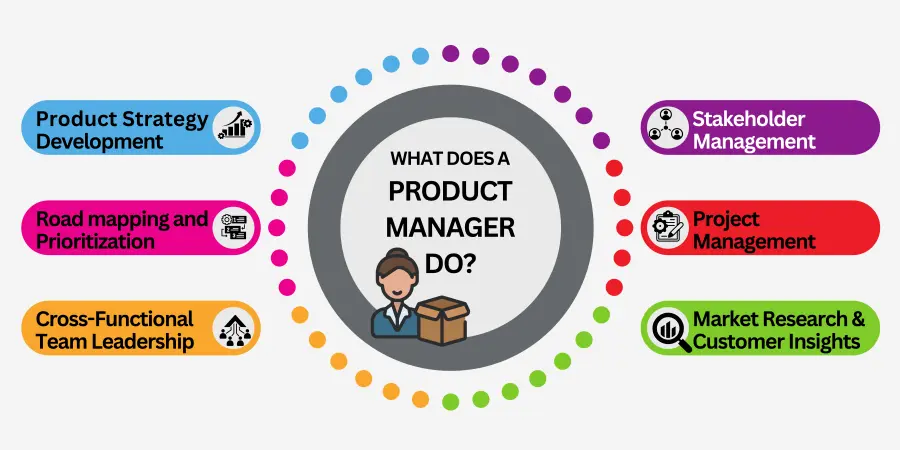
1. Defining Product Vision and Strategy

The product manager creates a vision for the product — what it aims to solve and why it matters. This involves:

  • Conducting market research
  • Understanding customer pain points
  • Analyzing competitors
  • Defining a unique value proposition
  • Creating product roadmaps

2. Gathering and Prioritizing Requirements

Product managers collect input from various sources (users, stakeholders, engineers) and decide which features or improvements to prioritize.

  • Writing user stories and acceptance criteria
  • Managing feature backlogs
  • Making data-informed trade-offs

3. Collaborating with Cross-Functional Teams

A product manager acts as a bridge between different departments, including:

  • Engineering: for technical implementation
  • UX/UI Design: for user experience
  • Marketing: for product launches
  • Sales & Support: for customer feedback and needs

4. Launching Products

Product managers lead go-to-market efforts. They work with marketing and sales to ensure the product is well-positioned and launched successfully.

5. Measuring Success and Iterating

After launch, product managers track KPIs and user feedback. They use this data to make product enhancements.

  • Metrics: NPS, MAUs, retention, churn, conversion rate
  • Tools: Google Analytics, Amplitude, Mixpanel, Hotjar

🎯 What Does a Product Manager’s Product Look Like?

A product manager’s product could be anything from a software application to a physical item or a digital service. Examples include:

  • A mobile banking app
  • An e-commerce website
  • A SaaS platform for marketers
  • A wearable fitness device
  • A logistics tracking system

The type of product a product manager handles depends on the industry — whether it’s tech, retail, healthcare, finance, or education.

In B2B (business-to-business), products are typically software or platforms used by companies. In B2C (business-to-consumer), products focus on end-user experiences.


💼 Types of Product Manager Jobs

The demand for product manager jobs is skyrocketing globally. According to LinkedIn and Glassdoor, product management is consistently ranked among the top 10 most in-demand and highest-paying careers.

Popular Product Manager Job Titles:

Job TitleKey Focus Area
Technical Product ManagerWorks closely with developers and architects
Growth Product ManagerFocuses on user acquisition and retention
AI/ML Product ManagerManages AI-powered product features
Platform Product ManagerHandles backend or internal tools
Mobile Product ManagerManages mobile app development
Hardware Product ManagerOversees physical devices or IoT products

Industries Hiring Product Managers:

  • Tech & SaaS (Google, Meta, Amazon, Microsoft)
  • Fintech (PayPal, Stripe, Revolut)
  • E-commerce (Amazon, Shopify, Flipkart)
  • Healthcare (Cerner, Medtronic)
  • Media & Streaming (Netflix, Spotify)
  • Automotive & IoT (Tesla, Ford, Bosch)

Whether you’re applying for product manager jobs in startups or enterprises, having a clear understanding of product development and customer empathy is key.


💰 Product Manager Salary: How Much Do PMs Make?

The product manager salary can vary by experience level, location, and industry.

Average Product Manager Salaries by Country:

CountryEntry-Level (USD)Mid-Level (USD)Senior-Level (USD)
USA$85,000 – $110,000$120,000 – $150,000$160,000 – $200,000+
UK£35,000 – £55,000£60,000 – £90,000£100,000+
India₹10 LPA – ₹20 LPA₹25 LPA – ₹40 LPA₹45 LPA – ₹60 LPA+
Canada$75,000 – $110,000$120,000+$140,000+
AustraliaAUD 90,000 – 150,000AUD 160,000+AUD 200,000+

Factors Affecting Product Manager Salary:

  • Experience & seniority
  • Size and type of the company
  • Educational background
  • Industry specialization
  • Certifications (e.g., Scrum, Agile, Product School)

With experience and a strong product track record, PMs often move into senior leadership roles like Director of Product, VP of Product, or Chief Product Officer (CPO) — all of which offer impressive compensation packages.


🎓 Skills Required to Become a Product Manager

To succeed in product management, you need a combination of technical knowledge, business acumen, and soft skills.

Top Product Manager Skills:

  • 📊 Analytical thinking & data-driven decision-making
  • 💬 Communication & stakeholder management
  • 🎨 UX/UI understanding and customer empathy
  • 🛠️ Basic technical skills (SQL, APIs, Jira)
  • 🧠 Strategic thinking and roadmap planning
  • ⏱️ Time and project management

While a technical background (CS, Engineering) helps, many successful product managers come from business, design, or even humanities backgrounds.


🛤️ How to Become a Product Manager

Breaking into product management doesn’t require a specific degree, but you do need to demonstrate product thinking and problem-solving ability.

Steps to Start a Career in Product Management:

  1. Understand the Role: Read books like Inspired by Marty Cagan or The Lean Product Playbook.
  2. Learn Tools: Get comfortable with Jira, Trello, Figma, Excel, Google Analytics, etc.
  3. Build Projects: Start side projects or contribute to open-source products.
  4. Certifications: Consider Product School, Pragmatic Institute, or General Assembly courses.
  5. Networking: Join PM communities like Mind the Product, Product Coalition, etc.
  6. Apply for APM Programs: Many companies offer Associate Product Manager roles for freshers.

🧩 Tools Used in Product Management

Here are some common tools a product manager might use daily:

PurposeTools
Project ManagementJira, Trello, Asana, Monday.com
Wireframing & PrototypingFigma, Balsamiq, Sketch
AnalyticsGoogle Analytics, Mixpanel, Amplitude
RoadmappingProductboard, Aha!, Roadmunk
CommunicationSlack, Zoom, Notion, Confluence

Knowing how to leverage these tools can significantly enhance a product manager’s productivity and decision-making.


💬 Real-Life Example: A Day in the Life of a Product Manager

A product manager’s day can be diverse and dynamic. Here’s a sample schedule:

TimeTask
9:00 AMCheck dashboards and metrics
9:30 AMDaily stand-up with dev/design team
10:00 AMPrioritize feature backlog
11:00 AMUser interview or stakeholder meeting
1:00 PMCollaborate on product roadmap
3:00 PMReview designs or prototypes
4:30 PMWrite PRD or update user stories
6:00 PMSync with sales/marketing for launch

No two days are alike in the life of a product manager, which makes the role both exciting and demanding.


🔮 Future of Product Management

As industries embrace digital transformation, the role of the product manager is evolving rapidly.

Trends in Product Management:

  • 🚀 Rise of AI/ML and data-driven products
  • 🧠 Ethical product management and user privacy
  • 🌍 Remote-first product teams
  • 🔁 Continuous product delivery (DevOps, CI/CD)
  • 🌱 Product-led growth and customer-centricity

The need for visionary product managers will only grow, making now a great time to enter the field.


🧾 Final Thoughts

So, what does a product manager do? They guide the entire product journey — from idea to reality. A product manager is a visionary, strategist, communicator, and executor rolled into one.

Whether you’re fascinated by building world-changing products or love working at the intersection of technology and people, product management is an exciting and rewarding career path. With the right mindset, skills, and tools, you can join the ranks of high-impact product managers who are shaping the future of innovation.


📌 Interested in becoming a product manager?

  • Explore product manager jobs on LinkedIn and job boards
  • Use online courses to master product thinking
  • Research product manager salary trends in your region
  • Start your own side project and treat it like a product
  • Join a product community and connect with mentors