
🏆 What Is E-E-A-T and Why Is It Important for SEO?
Table of Contents
- Introduction
- What Is E-E-A-T?
- E-E-A-T and Google’s Quality Rater Guidelines
- Deep Dive: Experience
- Deep Dive: Expertise
- Deep Dive: Authoritativeness
- Deep Dive: Trustworthiness
- E-E-A-T vs YMYL
- How E-E-A-T Impacts SEO Rankings
- How to Improve E-E-A-T on Your Website
- Measuring and Auditing E-E-A-T
- E-E-A-T and Content Strategy
- Common E-E-A-T Mistakes to Avoid
- Future of E-E-A-T
- Conclusion and Key Takeaways
1. Introduction
Search engine optimization (SEO) is no longer just about keywords, backlinks, and technical site audits. Over the last decade, the way search engines evaluate and rank web pages has transformed dramatically. Today, the credibility, trust, and authority of your content play as big a role in ranking as traditional signals.
One of the most influential concepts behind this transformation is E-E-A-T — short for Experience, Expertise, Authoritativeness, and Trustworthiness. Introduced through the Google Search Quality Rater Guidelines, E-E-A-T has become a cornerstone of modern SEO strategy.
Although E-E-A-T is not a direct algorithmic ranking factor, it strongly influences how Google perceives content quality. It acts as a guiding framework for evaluators and indirectly affects how pages are ranked.
Why E-E-A-T Matters Today
Years ago, ranking a website was often a numbers game. If you had the right keywords in the right places and enough backlinks, you could rank well — even if your content wasn’t particularly helpful. That era is long gone.
Search engines have evolved to prioritize real value, real people, and real trust. E-E-A-T ensures that the content ranking on the first page:
- Comes from people with relevant experience
- Is produced by authors with proven expertise
- Is published by sources with authority
- And is ultimately trustworthy
This shift is especially critical in what Your Money or Your Life (YMYL) topics — areas like health, finance, law, and safety — where misinformation can have serious real-world consequences.
2. What Is E-E-A-T?
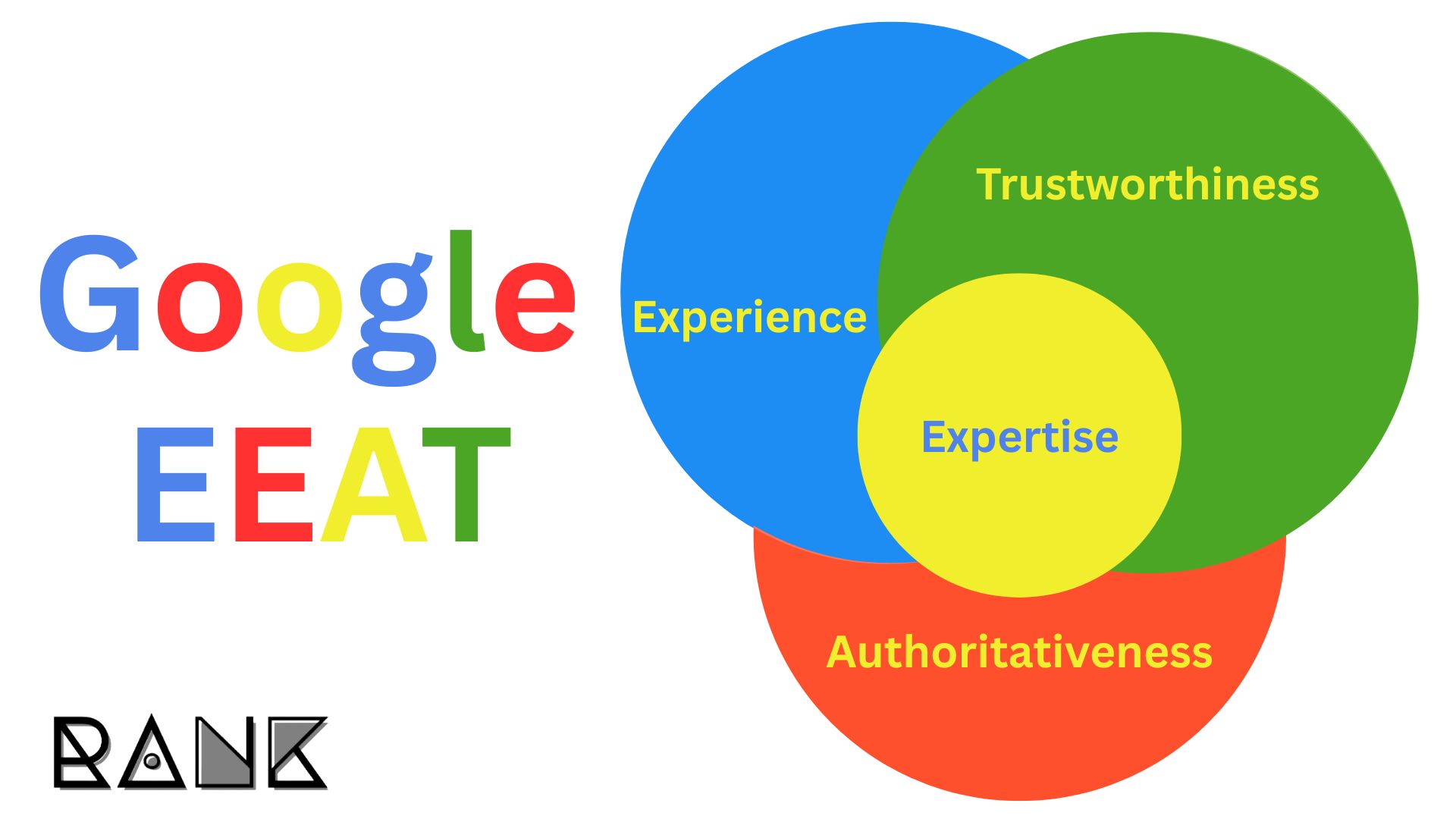
The acronym E-E-A-T stands for:
- Experience
- Expertise
- Authoritativeness
- Trustworthiness
This framework comes directly from the Google Search Quality Evaluator Guidelines. It’s how Google trains human raters to assess the quality of web pages. While these human ratings do not directly determine ranking, they inform Google’s algorithmic improvements — making E-E-A-T a key blueprint for creating high-quality content.
2.1 The Evolution of E-E-A-T
Originally, the concept was E-A-T — Expertise, Authoritativeness, Trustworthiness. But in December 2022, Google updated its guidelines and added a new “E” for Experience.
This addition reflects Google’s increasing emphasis on firsthand knowledge and authentic perspectives. For example:
- A travel blog written by someone who has actually visited the destination carries more weight.
- A product review written by someone who has used the product is more valuable than a generic affiliate post.
- A medical explanation written by a qualified professional with clinical experience builds trust.
2.2 Understanding Each Component
Experience
Google wants to know if the content creator has firsthand experience with the topic.
Examples:
- Personal case studies
- Product usage demonstrations
- Real travel photos
- Professional experiences shared transparently
Expertise
Expertise refers to the depth of knowledge or skill in a particular subject.
Examples:
- A legal guide written by a lawyer
- A medical article authored by a doctor
- A technical blog by a software engineer
Authoritativeness
Authority is about how others perceive your credibility. It involves:
- Recognition from peers
- Backlinks from authoritative sources
- Citations, mentions, and references in reputable media
Trustworthiness
Trust is the most critical factor of all. Even with great expertise or experience, if users don’t trust the site or author, rankings can suffer. Trust involves:
- Transparency (clear About pages, author bios, contact info)
- Accuracy (fact-checked content)
- Positive reputation signals (reviews, mentions, brand trust)
3. E-E-A-T and Google’s Quality Rater Guidelines
The Quality Rater Guidelines are a detailed document used by human raters hired by Google to evaluate how well its search results meet user needs. These raters don’t directly affect rankings, but their evaluations help Google improve its algorithms.
E-E-A-T is central to this evaluation process. A rater looks at:
- The purpose of the page
- The quality and accuracy of the content
- The reputation of the author and website
- Signals of experience and trust
3.1 Real-World Example
Imagine two websites both reviewing a laptop:
- Site A publishes a thin, AI-generated article with basic specs.
- Site B includes hands-on photos, personal insights from weeks of use, and links to credible sources.
Even if both pages target the same keyword, Site B demonstrates stronger E-E-A-T, likely earning more trust and better ranking potential.
4. Deep Dive: Experience
When Google added Experience to E-E-A-T, it signaled a major shift in how content quality is judged. Experience is about:
- Who is writing the content
- What personal involvement they have with the subject
- How that personal involvement is demonstrated in the content
4.1 How to Demonstrate Experience
- Use personal pronouns and storytelling (“When I tested this feature…”)
- Include original photos, screenshots, or videos
- Share results from your own testing, usage, or travel
- Offer unique tips learned through actual experience
4.2 Industries Where Experience Matters Most
- Product reviews and affiliate marketing
- Travel and food blogging
- Technology tutorials and how-to guides
- Medical or fitness journeys
- Educational courses and workshops
4.3 Benefits of Demonstrating Experience
- Builds reader trust
- Differentiates content from AI-generated noise
- Increases engagement and dwell time
- Encourages natural backlinks and shares
5. Deep Dive: Expertise
Expertise goes beyond experience. It reflects depth of knowledge, education, or professional background.
5.1 What Google Considers as Expertise
- Professional credentials
- Demonstrable skills
- Evidence of deep understanding of the topic
- High-quality, fact-checked, accurate content
5.2 Ways to Showcase Expertise
- Include author credentials and professional bios
- Link to academic or professional achievements
- Publish detailed, well-researched guides
- Participate in interviews or podcasts
- Provide transparent sources for claims
5.3 Building Topical Authority
Expertise also involves topical authority — consistently covering a subject in depth.
For example:
- A health website regularly publishing well-researched articles on nutrition builds expertise over time.
- A tech site covering every new smartphone release becomes a trusted go-to source.
6. Deep Dive: Authoritativeness
Authority is earned, not claimed. It reflects external validation of your expertise.
6.1 Key Signals of Authority
- High-quality backlinks from reputable sources
- Mentions in news and media outlets
- Citations by other experts
- Positive brand reputation
6.2 How to Build Authority
- Guest posting and collaborations
- Getting cited in press releases and interviews
- Partnering with industry experts
- Publishing original research, reports, or data
6.3 Long-Term Benefits of Authority
- Higher trust and rankings
- Better user retention
- Stronger brand recall
- Competitive moat in saturated niches
7. Deep Dive: Trustworthiness
Trust is the foundation of E-E-A-T. Google has explicitly said that Trust is the most important element. Without trust, experience, expertise, and authority mean little.
7.1 How to Build Trust
- Use HTTPS and secure site architecture
- Be transparent with author and company info
- Cite credible sources
- Respond to user concerns and reviews
7.2 Trust Signals Google Looks For
- Positive reputation (reviews, mentions, ratings)
- Clear editorial policies
- Minimal ads and no deceptive practices
- Accurate and current information
7.3 Reputation Management
- Actively monitor and respond to negative feedback
- Encourage positive reviews
- Maintain a consistent, professional brand voice
8. E-E-A-T vs YMYL (≈ 2000 words)
Your Money or Your Life (YMYL) pages are those that could impact:
- People’s health
- Financial stability
- Safety
- Legal standing
- Civic trust
For these topics, E-E-A-T expectations are far higher.
Example:
- A fitness blog post about “Best Exercises for Heart Patients” must demonstrate medical expertise and trusted sources.
- A financial guide about investment strategies must come from qualified experts.
9. How E-E-A-T Impacts SEO Rankings
While E-E-A-T is not a direct ranking factor, it affects ranking indirectly and powerfully:
- High E-E-A-T improves content quality signals Google values
- Increases user engagement, trust, and dwell time
- Encourages organic link building
- Strengthens brand reputation and visibility
Strong E-E-A-T content often dominates in competitive niches because:
- It satisfies user intent better
- It earns backlinks naturally
- It’s harder for low-quality competitors to replicate
10. How to Improve E-E-A-T on Your Website
10.1 Author and Bio Pages
- Add real author photos and credentials
- Link to external profiles (LinkedIn, associations)
- Highlight professional experience
10.2 Fact-Checking and Sources
- Always cite reputable sources
- Link to primary research and official data
- Keep information updated
10.3 Technical and Trust Enhancements
- Use HTTPS
- Provide clear contact and about pages
- Avoid excessive ads or intrusive popups
10.4 Link Building and PR
- Focus on quality over quantity
- Earn mentions through thought leadership
- Publish research or unique data
11. Measuring and Auditing E-E-A-T
Regular E-E-A-T audits help you identify weaknesses and strengthen your trust signals.
Audit Checklist
- ✅ Is author information clear and credible?
- ✅ Are sources cited and reliable?
- ✅ Are trust signals visible (reviews, security, contact)?
- ✅ Does the content demonstrate experience and expertise?
You can also use SEO tools to evaluate:
- Backlink quality
- Brand mentions
- Site reputation
- Content accuracy
12. E-E-A-T and Content Strategy
Integrating E-E-A-T into your content strategy ensures long-term SEO growth.
12.1 Topic Clusters
Cover topics deeply, not broadly. Build hubs of expertise.
12.2 Evergreen + Timely Content
- Evergreen builds lasting authority.
- Timely content attracts fresh links and engagement.
12.3 Align With User Intent
Create content that truly solves user problems.
13. Common E-E-A-T Mistakes to Avoid
- Fake author bios or stock photos
- Copy-pasted or AI-only content
- Unverified claims or low-quality sources
- Neglecting user trust and UX
14. Future of E-E-A-T
E-E-A-T will continue to evolve, especially in the era of Generative AI.
Google is increasingly rewarding:
- Authentic, first-hand human perspectives
- Transparent authorship
- Verifiable trust signals
As AI content floods the web, brands that build genuine trust will stand out.
15. Conclusion and Key Takeaways
- E-E-A-T = Experience + Expertise + Authoritativeness + Trustworthiness.
- It’s not a ranking factor, but it strongly influences rankings.
- Trust is the most important element.
- Sites with strong E-E-A-T stand out in competitive niches and are more resilient to algorithm updates.
- Long-term SEO success comes from real value, not shortcuts.
💡 Final Thought: Search engines may change their algorithms, but trust and credibility never go out of style.